Roman Ritual Symbols Guide for Curious Visitors
Roman ritual symbols guide for travellers: read altars, laurel, incense and sacred animals in Rome’s forums, temples and museum collections with fresh eyes
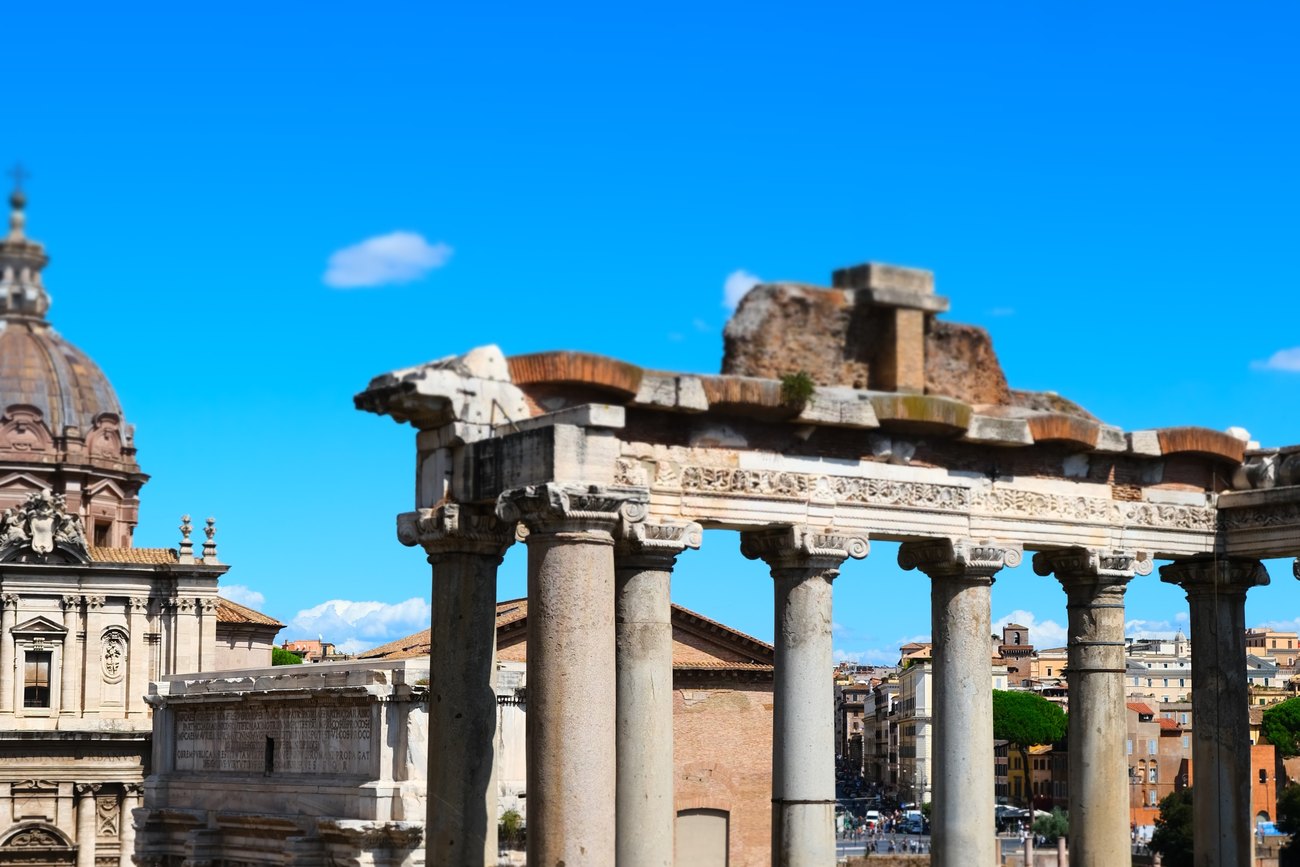
The first surprise is the silence. A few metres from the roar of traffic circling the Colosseum, the Roman Forum opens into broken marble, umbrella pines and a valley of columns that once held the arguments, ceremonies and daily business of an empire. Knowing how to navigate Roman forums is less about finding every ruin and more about giving each fragment its proper place in the story.
Rome’s forums are not one neat archaeological park. They are several connected civic spaces, built and rebuilt over centuries, with different entrances, ticket arrangements and ways of being understood. Arrive with a route in mind and a little patience for the layers. The reward is Rome at its most intimate: not a monument viewed from a distance, but a city whose old streets still seem to lead somewhere.
This distinction saves considerable confusion. The Roman Forum is the older public heart of ancient Rome, set in the valley between the Palatine and Capitoline Hills. It is where you will find the Arch of Titus, the Temple of Antoninus and Faustina, the Basilica of Maxentius and Constantine, and the small, round Temple of Vesta. Your entry commonly forms part of the combined Roman Forum, Palatine Hill and Colosseum visit.
The Imperial Forums sit just north-east of the Roman Forum, beyond Via dei Fori Imperiali. These were later, purpose-built squares commissioned by emperors including Caesar, Augustus, Nerva and Trajan. They were statements of power as much as places of administration. Trajan’s Forum, with its dramatic market complex rising up the slope, feels especially architectural: a handsome city of brick arcades rather than a field of fallen columns.
Do not expect to stroll freely from one area into the other. The modern road divides them, and access rules can differ. Think of the Roman Forum as a long, lived-in civic valley, and the Imperial Forums as a sequence of imperial declarations. They belong to the same ancient city, but they ask different questions of you.
For most visitors, the best approach is to devote a morning to the Roman Forum and Palatine Hill, then take in the Imperial Forums from the viewpoints along Via dei Fori Imperiali or with a separate, focused visit. Trying to absorb every site in a single dash between lunch and another reservation turns extraordinary places into a blur of pale stone.
Begin as early as your ticket permits. The light is gentler, the crowds are thinner and the open areas offer little shade later in the day. Wear shoes with grip rather than shoes chosen solely for the photo - ancient paving is uneven, polished in places and occasionally slippery after rain. A refillable water bottle, sunscreen and a charged mobile are sensible companions, particularly from late spring through early autumn.
If you enter near the Arch of Titus, pause before descending into the Forum. The arch commemorates Rome’s victory in Judaea, and its interior reliefs show the spoils carried in triumph through the city. This is an excellent threshold because it introduces a truth that is easy to miss among the picturesque ruins: the Forum was shaped by conquest, wealth, religion and political theatre.
From there, let the Sacred Way draw you downhill. This was the Forum’s ceremonial spine, the route of triumphal processions. You need not follow it with military efficiency. Stop at the Basilica of Maxentius and Constantine, whose vast surviving vaults make the surrounding figures seem suddenly human-sized. Then look across to the Temple of Romulus and the Temple of Antoninus and Faustina, later incorporated into the church of San Lorenzo in Miranda. Rome rarely replaces one era with another. It builds on top.
At the centre of the Forum, give yourself time for the House of the Vestals and the Temple of Vesta. The Vestal Virgins tended the sacred flame, their role bound to the security of the state itself. The remaining pool, statues and garden-like arrangement can feel unexpectedly quiet. This is where a guide’s storytelling is particularly valuable: a few details about ritual, privilege and punishment turn scattered stones into the domestic and spiritual centre of Roman public life.
Continue towards the Curia Julia, the senate house, and the Arch of Septimius Severus at the Forum’s north-western end. The Curia is one of the rare structures that still conveys its original interior volume. Stand outside it and resist the urge to imagine every Roman political decision as a scene from a film. The senate was influential, certainly, but its power changed repeatedly across the republic and empire. The Forum rewards this kind of nuance.
The climb to the Palatine is not an optional extra if you have the time and stamina. Legend places the story of Romulus and Remus here, while archaeology reveals a hill transformed into elite residences and imperial palaces. It also offers the clearest view back over the Forum, allowing you to understand its shape as a whole rather than as a collection of stops.
The trade-off is physical. On a hot day, the ascent and wide grounds can be tiring, especially if you have already visited the Colosseum. If you prefer depth over distance, choose a few Palatine highlights and settle at a viewpoint rather than attempting every path. The Farnese Gardens, terraces and views towards the Circus Maximus give the visit a gracious final rhythm.
Via dei Fori Imperiali offers elevated views over the forums of Augustus, Nerva and Trajan. It can be busy, but it is a useful orientation walk, especially in late afternoon when the stone catches a warmer colour. Walk from the Colosseum end towards Piazza Venezia, keeping the Trajan’s Column in sight. Its spiralling relief is a carved campaign report, depicting the Dacian Wars in remarkable detail.
If you have only a short time, focus on Trajan’s Forum and Trajan’s Market. The market’s multiple levels reveal how dense and practical imperial Rome could be, even beside its grand ceremonial spaces. It is not simply a picturesque ruin: the complex helps explain administration, commerce and urban scale in a way that a single temple cannot.
Augustus’s Forum deserves a slower look if mythology is your way into history. At its centre stood the Temple of Mars Ultor, Mars the Avenger, erected after Augustus framed the defeat of Caesar’s assassins as an act of justice. Its towering wall, built partly as a firebreak between the forum and the nearby Suburra neighbourhood, still rises behind the temple precinct. It is a wonderfully Roman detail: monumental propaganda meeting a very practical urban concern.
Ancient Rome did not keep myth in a separate, decorative box. Stories of gods, founders and omens were embedded in civic life. Venus was not merely a goddess in a sculpture. For Julius Caesar, she was an ancestor. Mars was not only a god of war. He was father of Romulus, founding figure of the city.
When the archaeological labels begin to merge, choose one myth and follow its traces. At the Palatine, consider Romulus and Remus, whose story of fraternal rivalry gives the hill its charged identity. Near the Temple of Vesta, think of the flame that had to remain alive for Rome to endure. At the Forum of Augustus, notice how a ruler used Mars and ancestry to make his political authority appear inevitable.
This is why a mythology-led walk can be more memorable than a string of dates. You leave with characters, motives and tensions, not just photographs of ruins. Rêverie Tours’ Rome mythology walk through the Imperial Forums is designed around precisely this pleasure: reading the city through the gods and mortals who made its public spaces mean something.
Book timed entry where required and check current access conditions shortly before your visit, as archaeological sites can change routes for conservation, events or weather. Avoid planning the Forum immediately after a substantial lunch in summer. The heat rises from the stone, and the site asks for attention rather than endurance.
Photography is best in the early morning or later afternoon, but do not spend the entire visit searching for an empty frame. A person passing beneath the Arch of Septimius Severus or a cluster of schoolchildren on the Sacred Way can make the scale more legible. These were, after all, public spaces made for crowds, voices and spectacle.
Leave a little room in the day after the forums. Walk towards Monti for a quiet coffee, or find a table near the Capitoline for an aperitivo as the light softens. The most satisfying way to leave the ancient city is not with the feeling that you have completed it, but with one image still turning in your mind: a senate house, a sacred flame, a carved procession, a god looking down from a temple that is no longer there.
The easiest way to navigate the Roman Forum is to follow a logical route from the Arch of Titus along the Sacred Way towards the Capitoline end of the site. Allow time for the major monuments, then continue towards the Palatine Hill if your ticket includes it. The Forum is uneven and spread across a large archaeological area, so comfortable shoes, water and plenty of time make the visit much easier.
The Roman Forum was the central civic space of ancient Rome, while the Imperial Forums were a series of monumental squares built by individual Roman rulers, including Julius Caesar, Augustus, Nerva and Trajan. They are located next to one another but are distinct archaeological areas with different entrances and access arrangements.
No. The Roman Forum and Imperial Forums are separate archaeological areas. The Roman Forum sits between the Palatine and Capitoline Hills, while the Imperial Forums extend north-east towards Piazza Venezia along Via dei Fori Imperiali. Both are essential for understanding ancient Rome, but they represent different periods and political ambitions.
Important sights in the Roman Forum include the Arch of Titus, Sacred Way, Basilica of Maxentius and Constantine, Temple of Romulus, Temple of Antoninus and Faustina, Temple of Vesta, House of the Vestals, Curia Julia and Arch of Septimius Severus. Rather than trying to see every ruin, choose several highlights and give yourself time to understand their historical context.
Allow at least two to three hours for the Roman Forum and Palatine Hill if you want to explore without rushing. Visitors interested in ancient Roman history and archaeology may want longer. The Colosseum is usually visited separately, so allow additional time if you are combining all three sites.
Yes. The Colosseum, Roman Forum and Palatine Hill are commonly visited together, and many tickets combine the three attractions. A sensible route is to visit the Colosseum first or early in the day, followed by the Forum and Palatine Hill, while allowing enough time to walk between and explore each site.
The best entrance depends on your ticket, itinerary and whether you are visiting the Colosseum first. The entrance near the Arch of Titus is particularly useful for visitors who want to begin with the Sacred Way and descend into the main Forum. Check your ticket and current access arrangements before arriving because entrances and routes can change.
Early morning or later afternoon is generally more comfortable than the middle of the day, particularly during Rome's warmer months. Morning offers softer light and can be quieter, while late afternoon creates beautiful light across the ancient stone. Always check the current opening hours and seasonal schedule before visiting.
The Roman Forum can be physically demanding because the archaeological site contains uneven ancient paving, slopes, steps and long walking routes. The Palatine Hill also involves climbing. Comfortable shoes with good grip are recommended, particularly after rain.
The Roman Forum provides a chance to walk through the former civic centre of ancient Rome, where political, religious, commercial and ceremonial life intersected. The experience becomes much more meaningful when you understand what the surviving temples, basilicas, roads and arches represented in Roman society.
The Via Sacra, or Sacred Way, was one of the principal roads through the Roman Forum. It was used for religious ceremonies and triumphal processions and connected important temples and civic buildings. Walking along it today gives you a sense of how the Forum functioned as a ceremonial centre of ancient Rome.
The Arch of Titus is a triumphal arch commemorating the Roman victory in the Jewish War and the capture of Jerusalem in AD 70. Its interior reliefs depict Roman soldiers carrying spoils from the Temple in Jerusalem, making it an important monument for understanding Roman imperial propaganda and military triumph.
The Roman Forum was the centre of political, religious, commercial and public life in ancient Rome. It contained temples, basilicas, meeting spaces, monuments and ceremonial routes. Roman citizens came here for legal business, political activity, religious ceremonies, public announcements and major processions.
The Curia Julia was the senate house of ancient Rome. Julius Caesar began its construction and Augustus completed it after Caesar's assassination. Its surviving structure gives visitors one of the clearest impressions of an ancient Roman civic building still standing within the Forum.
The Temple of Vesta was dedicated to Vesta, goddess of the hearth. The sacred flame maintained by the Vestal Virgins was associated with the security and continuity of Rome. The circular temple and nearby House of the Vestals are among the most evocative remains in the Roman Forum.
The Vestal Virgins were priestesses responsible for maintaining the sacred fire of Vesta. They held an unusual and highly respected position in Roman society and performed religious duties considered essential to the wellbeing of the Roman state.
The Palatine Hill is one of Rome's seven hills and is traditionally associated with the foundation story of Romulus and Remus. Archaeology also shows that it became an important residential area for Rome's elite and later the location of extensive imperial palaces. It provides some of the best views over the Roman Forum and Circus Maximus.
Yes. Several viewpoints on the Palatine Hill overlook the Roman Forum, allowing you to understand the Forum as a whole rather than seeing its monuments individually from ground level. The elevated perspective is particularly useful for appreciating the valley between the Palatine and Capitoline Hills.
The Imperial Forums are a group of monumental public spaces built between the late Republic and Roman Empire. They include the Forums of Julius Caesar, Augustus, Nerva and Trajan, each reflecting the ambitions and political messaging of its builder.
Trajan's Forum was one of the largest and most ambitious Imperial Forums. Built under Emperor Trajan, it included a monumental open square, the Basilica Ulpia, Trajan's Column and the complex now known as Trajan's Market. The surviving architecture demonstrates the scale of Roman imperial construction.
Trajan's Column is a monumental Roman column decorated with a continuous spiral relief depicting scenes from Trajan's campaigns against the Dacians. It stands near the centre of Trajan's Forum and is one of the most recognisable monuments of ancient Rome.
The Forum of Augustus was commissioned by Emperor Augustus and centred on the Temple of Mars Ultor, or Mars the Avenger. The complex connected Augustus's political authority with Roman mythology, ancestry and military victory, making it an important example of imperial propaganda expressed through architecture.
Some sections of the Imperial Forums can be viewed from Via dei Fori Imperiali, while other archaeological areas have controlled access or require separate tickets. If you want to explore the sites beyond the street-level viewpoints, check current opening hours and ticket arrangements before your visit.
Access varies depending on the archaeological area and the type of visit. The Roman Forum is generally visited as part of a combined ticket with the Colosseum and Palatine Hill, while parts of the Imperial Forums can be viewed from public areas around Via dei Fori Imperiali. Always check current ticketing and access information before your visit.
Yes, you can explore the Roman Forum independently. However, the ruins can be difficult to interpret because many structures survive only partially. A Rome history tour or private guide can help connect the archaeological remains with the political, religious and social life of ancient Rome.
A guide can add context to the Roman Forum ruins, Palatine Hill and Imperial Forums, particularly if you are interested in Roman mythology, politics or everyday life. Instead of simply identifying monuments, a good guide can explain why they were built, how they were used and how Rome changed over time.
Roman mythology is woven throughout the ancient city. The Palatine Hill is associated with Romulus and Remus, the Temple of Vesta connects the Forum with the sacred hearth of Rome, and the Forum of Augustus was dominated by the Temple of Mars Ultor. Understanding these myths can make the archaeological landscape much easier to interpret.
Bring comfortable walking shoes, water, sunscreen, a hat and a charged phone. There is limited shade across some areas of the archaeological site, and the combination of uneven ground, exposed stone and Rome's summer heat can make the visit tiring.
Yes, but summer visits to the Roman Forum can be hot, particularly around midday. An early morning visit is often more comfortable, and visitors should bring water, sun protection and appropriate footwear. The Palatine Hill is also exposed in several areas.
After exploring the ancient sites, consider walking towards Monti, Piazza Venezia or the Capitoline Hill for a coffee, lunch or aperitivo. Allowing some slower time after the Forum gives you a chance to experience the modern neighbourhoods surrounding ancient Rome rather than moving immediately to another major attraction.
Yes. A Rome mythology tour offers a different way to understand the Forum by connecting archaeological sites with stories about gods, heroes and the legendary foundation of Rome. Following themes such as Romulus and Remus, Mars, Venus and Vesta can make the ruins easier to remember and interpret.
Yes. A private Rome mythology and history tour can combine the Roman Forum, Imperial Forums and surrounding ancient sites with the stories and political ideas that shaped them. Rêverie Tours offers private Rome experiences designed around mythology, history and the ancient city.
Explore our Rome experiences: mythology among the Imperial Forums, and a snacks and facts walk through the city’s hidden streets.
Explore Rome Tours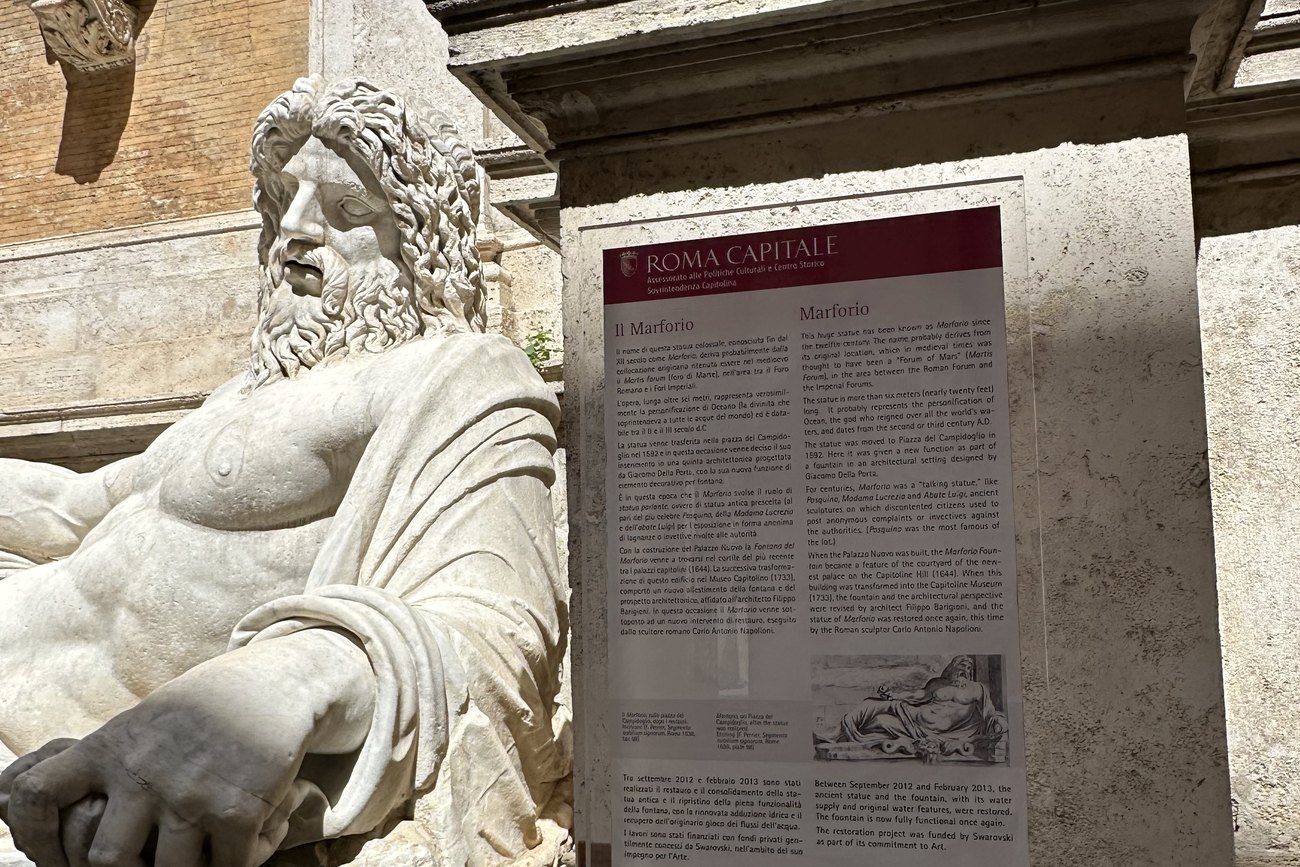
Roman ritual symbols guide for travellers: read altars, laurel, incense and sacred animals in Rome’s forums, temples and museum collections with fresh eyes
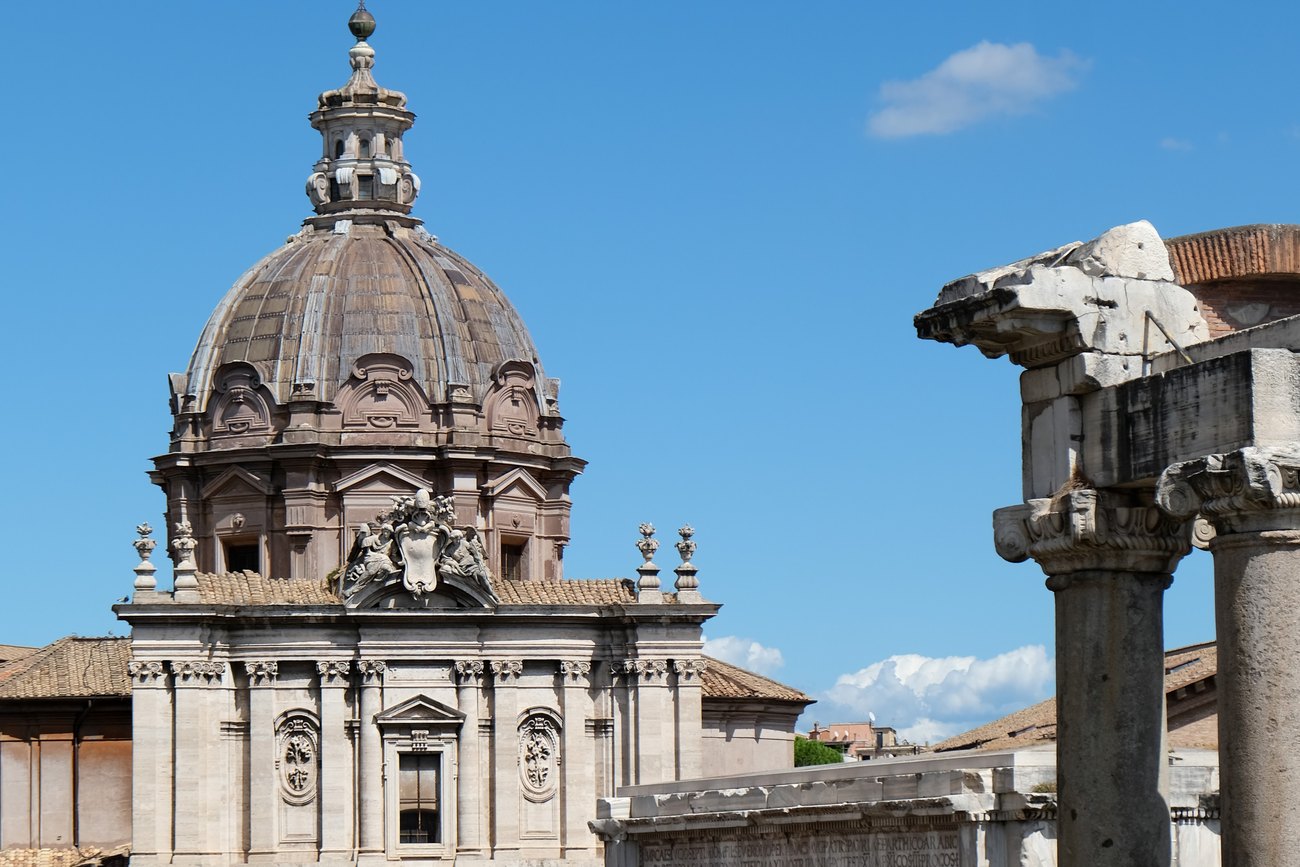
Trace Imperial Forums history through Caesar, Augustus and Trajan, and see how Rome turned marble, myth and power into its most theatrical precinct alive.