How to Navigate Roman Forums with a Clear Route
Learn how to navigate Roman forums with a thoughtful route, timed pauses and myth-rich context, from the Arch of Titus to Trajan’s Market in Rome today.
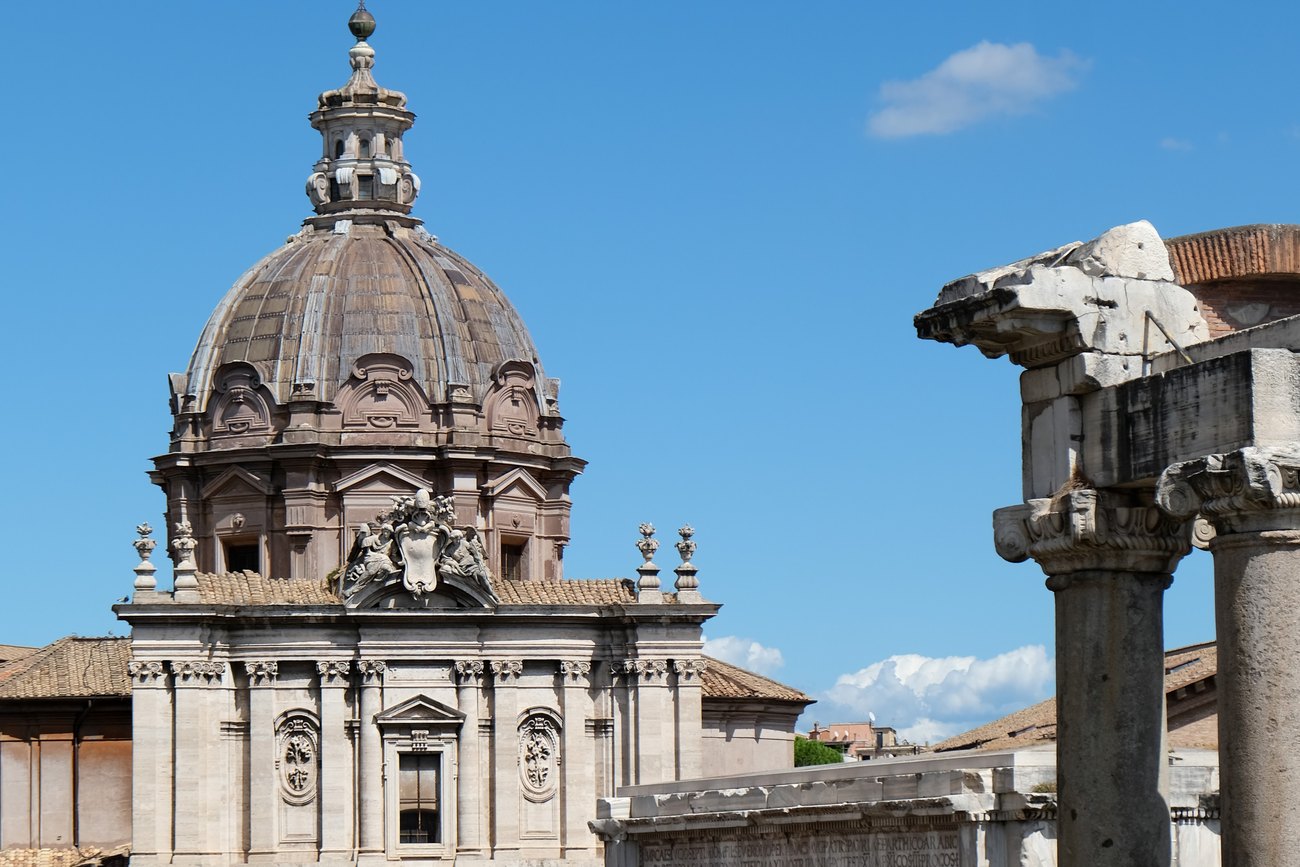
The Imperial Forums history is not a story of one ancient square. It is the story of Rome repeatedly remaking its own centre, ruler by ruler, in pale marble, coloured stone and carefully staged myth. Walking here, between the Capitoline and Quirinal hills, you can feel the city’s most powerful men competing for eternity - and inviting the public to admire them for it.
For the fuller guide, see How to Navigate Roman Forums with a Clear Route.
For travellers who know the Colosseum but want Rome to feel more intimate and legible, the forums offer a different kind of drama. Their broken columns and sun-warmed paving stones reveal how politics, religion, commerce and family legend were woven into daily life. This was Rome’s great architectural argument: each emperor had something to prove.
Before emperors ruled Rome, the Roman Forum was already full to bursting. It was the civic heart of the Republic: a place for elections, law courts, temples, triumphs, gossip and business. By the first century BCE, however, its tight, irregular spaces could no longer contain the scale of Roman political life.
Julius Caesar saw both a practical problem and an opportunity. In 46 BCE, he dedicated the first of the Imperial Forums, the Forum of Caesar. It sat beside the older Roman Forum but announced a new order. Rather than adapting to the past, Caesar created his own grand precinct, paid for in part with the wealth of conquest.
At its far end stood the Temple of Venus Genetrix, Venus the Ancestress. Caesar’s family, the Julii, claimed descent from the goddess through the Trojan hero Aeneas. The claim was not subtle. By placing Venus at the centre of his forum, Caesar made divine ancestry part of his public identity.
The forum also held law courts and commercial activity, but its message was personal. Caesar was presenting himself as the man who had restored and enlarged Rome. His assassination in 44 BCE did not slow the building of imperial imagery. It made the question of who would inherit his legacy even more urgent.
Caesar’s adopted heir, Octavian, emerged from civil war as Augustus, Rome’s first emperor. His Forum of Augustus, dedicated in 2 BCE, was more disciplined and morally charged than Caesar’s. Here, the Temple of Mars Ultor - Mars the Avenger - stood at the centre, fulfilling Augustus’s vow to avenge Caesar’s murder.
The building carried an extraordinary emotional weight. Rome had endured years of civil conflict, and Augustus needed to frame his victory as justice rather than ambition. Mars Ultor gave divine authority to that story. The temple became associated with military decisions, the departure of commanders for war and the return of Roman standards.
On either side of the forum, porticoes displayed statues of Rome’s great figures. One series honoured Aeneas and the Julian line; another celebrated Romulus and distinguished Romans of the Republic. Augustus placed himself at the meeting point of myth, ancestry and civic achievement. He did not simply claim power. He suggested that Roman history had always been moving towards him.
Look closely at what this means for an Imperial Forums walk. The statues were not decoration in the modern sense. They were a lesson in who belonged to Rome’s memory and why. Augustus used the past as a living cast of characters, with himself as the inevitable next chapter.
One surviving detail makes the Forum of Augustus feel especially close: its immense high wall, built from local peperino and stone blocks. It separated the elegant marble precinct from the crowded Suburra neighbourhood behind it, a densely populated area of winding streets, inns and apartment buildings.
The wall was a practical firebreak, but it also made a powerful contrast. On one side stood imperial order, symmetry and ancestral glory. On the other was the noisy, unpredictable city that supplied Rome’s labour, appetite and political energy. Ancient Rome was never as polished as its monuments wished to appear.
The Imperial Forums were extended across roughly 150 years. They are often spoken of as a single complex, but each forum had its own mood, patron and political purpose.
Vespasian added the Forum of Peace after the chaos of Nero’s reign and the civil war of 69 CE. Dedicated around 75 CE, it was part temple precinct, part garden and part display of imperial plenty. Vespasian housed treasures taken from Jerusalem there, turning military victory into a visible statement of restored stability. It was less enclosed and theatrical than some of the other forums, perhaps deliberately so: peace needed to look generous.
Then came the Forum of Nerva, also known as the Forum Transitorium. Begun by Domitian and completed by his successor Nerva in 97 CE, it occupied an awkward narrow passage between earlier forums. Its very shape tells a story about Rome’s crowded centre. Even imperial building projects had to negotiate space, older monuments and busy routes through the city.
Its temple was dedicated to Minerva, goddess of wisdom, strategic warfare and skilled work. Domitian favoured her, and her presence connected imperial authority with intelligence and order. The surviving reliefs and architectural fragments suggest a richly ornamented space, one in which divine protection and visual display were inseparable.
The Forum of Trajan was the largest and last of the Imperial Forums, completed in the early second century CE after Trajan’s victories in Dacia, in present-day Romania. To make room for it, engineers cut away part of the Quirinal Hill. The achievement was audacious even by Roman standards.
Designed by the architect Apollodorus of Damascus, Trajan’s complex included a vast open square, the Basilica Ulpia, libraries and the celebrated Column of Trajan. This was not merely another public square. It was an imperial landscape on a scale that made the earlier forums feel almost private.
The column, dedicated in 113 CE, still rises above the ruins with its spiral narrative of the Dacian Wars. Its reliefs do more than record battle. They show marching troops, river crossings, speeches, construction, sacrifice and camp life. Trajan appears again and again, composed and attentive, the ideal commander at the centre of a disciplined world.
There is a trade-off in trying to read the column from ground level: its story is intricate, but many scenes are difficult to see clearly. That limitation is revealing. The monument was not designed only as a readable historical record. It was a vertical proclamation, visible across the forum, declaring that Rome’s power had reshaped both distant lands and its own capital.
The Basilica Ulpia, meanwhile, demonstrates that Roman grandeur was not confined to temples. Basilicas were civic buildings used for legal and commercial affairs. Here, the practical machinery of public life sat inside an architectural setting funded by conquest. In Rome, administration itself could be a spectacle.
The Imperial Forums can initially seem fragmented. You may see a column standing apart from its original temple, a section of pavement below modern street level, or a sculpted frieze displayed behind protective barriers. This is not a failure of the site. It is part of its truth.
Rome did not freeze after antiquity. Earthquakes, fires, changing rulers, medieval building and centuries of stone reuse altered the forums dramatically. Marble was stripped for lime or incorporated into churches and palaces. New roads crossed old ceremonial spaces. The city kept living, and the monuments became material for later Romes.
It helps to approach the area slowly rather than trying to tick off every named ruin. Notice the shifts in level, the immense scale of Trajan’s markets rising against the hill, and the way a narrow lane can suddenly open onto ancient masonry. Let your guide or a good reconstruction fill in the missing roofs, statues and painted surfaces. Ancient Rome was far more colourful than the cream-and-grey ruins suggest.
A mythology-focused walk is particularly rewarding here because the gods are not an optional layer of the story. Venus gave Caesar a divine pedigree; Mars justified Augustus’s vengeance; Minerva lent authority to imperial rule; and the deified emperor became a presence in the city’s sacred geography. The forums were where Roman power made itself feel natural, ordained and permanent.
Yet their ruins tell a more human story. Every emperor built in response to pressure: overcrowding, civil war, rivalry, military victory or a need for legitimacy. The stones remain magnificent because they were designed to overwhelm. Their gaps are just as compelling, because they remind us that even the most carefully choreographed image of power eventually becomes part of a much longer city story.
When you stand near the Forum of Trajan at late afternoon, with the light gathering on the brick and marble, resist the urge to rush towards the next landmark. This is a place to linger, to picture the crowds beneath the porticoes, and to let Rome’s old ambitions feel startlingly present.
Explore our Rome experiences: mythology among the Imperial Forums, and a snacks and facts walk through the city’s hidden streets.
Explore Rome Tours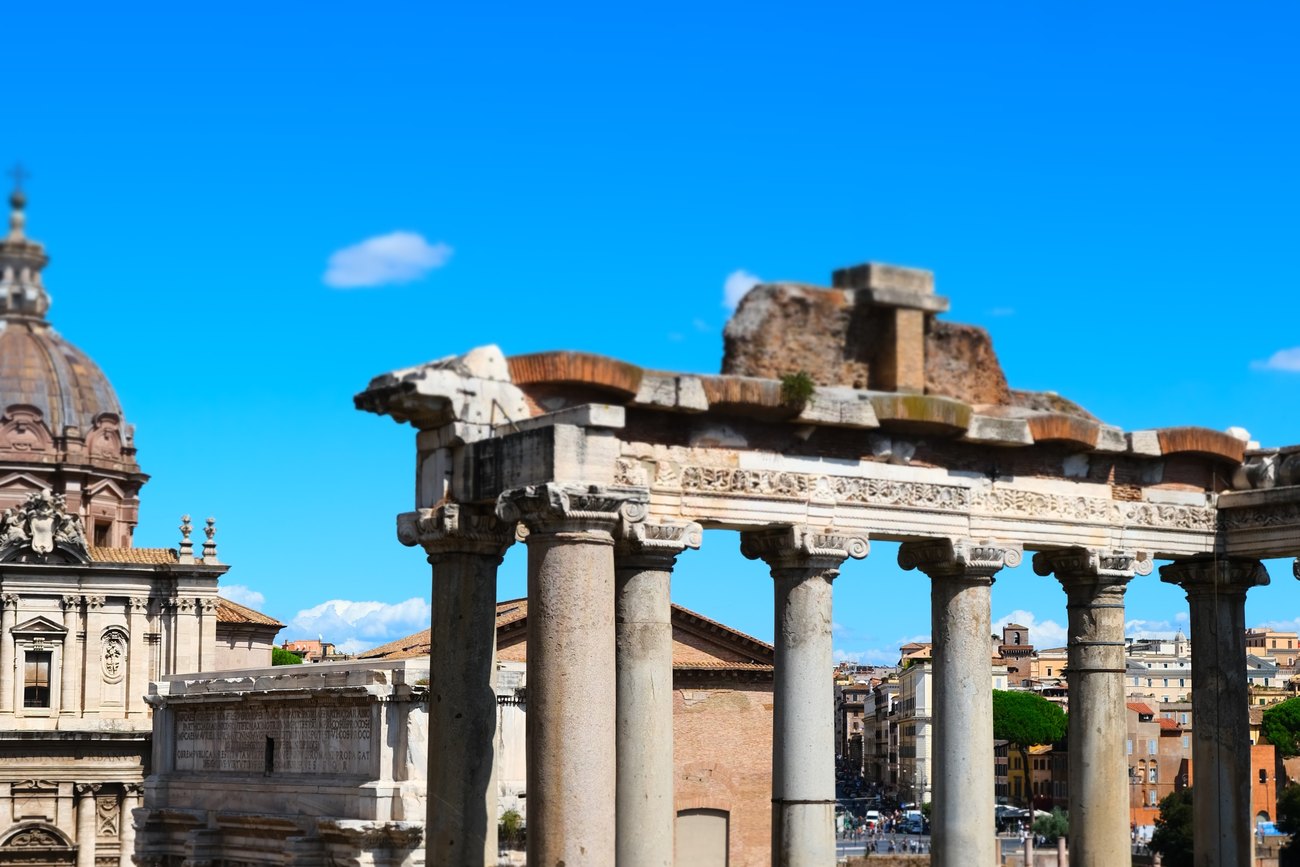
Learn how to navigate Roman forums with a thoughtful route, timed pauses and myth-rich context, from the Arch of Titus to Trajan’s Market in Rome today.
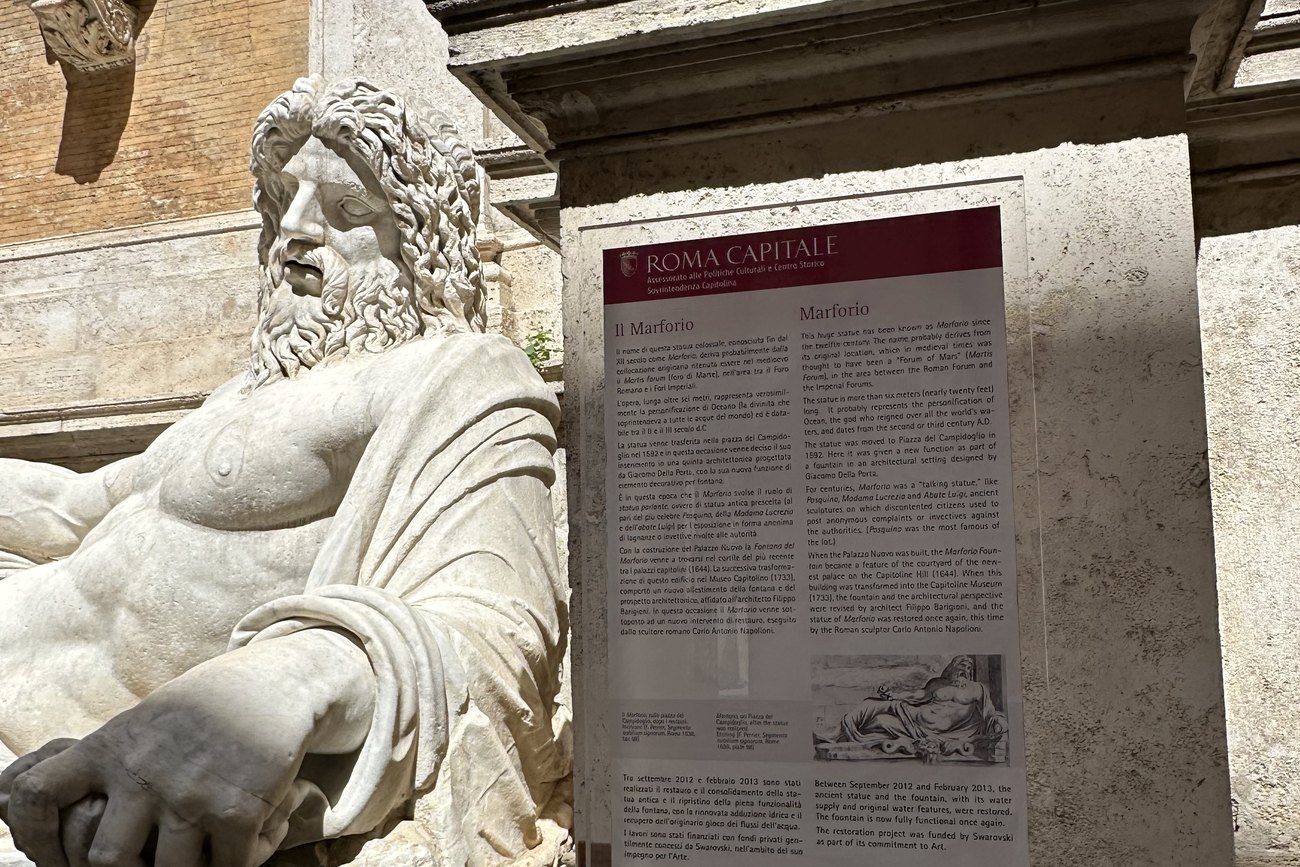
Roman ritual symbols guide for travellers: read altars, laurel, incense and sacred animals in Rome’s forums, temples and museum collections with fresh eyes