Paris does not sit on the sea, yet few city rituals feel more Parisian than leaning over a marble bar with a silver tray of oysters between friends. A Paris oyster tasting tour turns that simple pleasure into a small journey across France’s coastline - from the tidal basins of Brittany to the salt marshes of the Atlantic - without leaving the city. It is an experience for travellers who would rather know what is in their glass, on their plate and behind the counter than simply tick off another famous address.
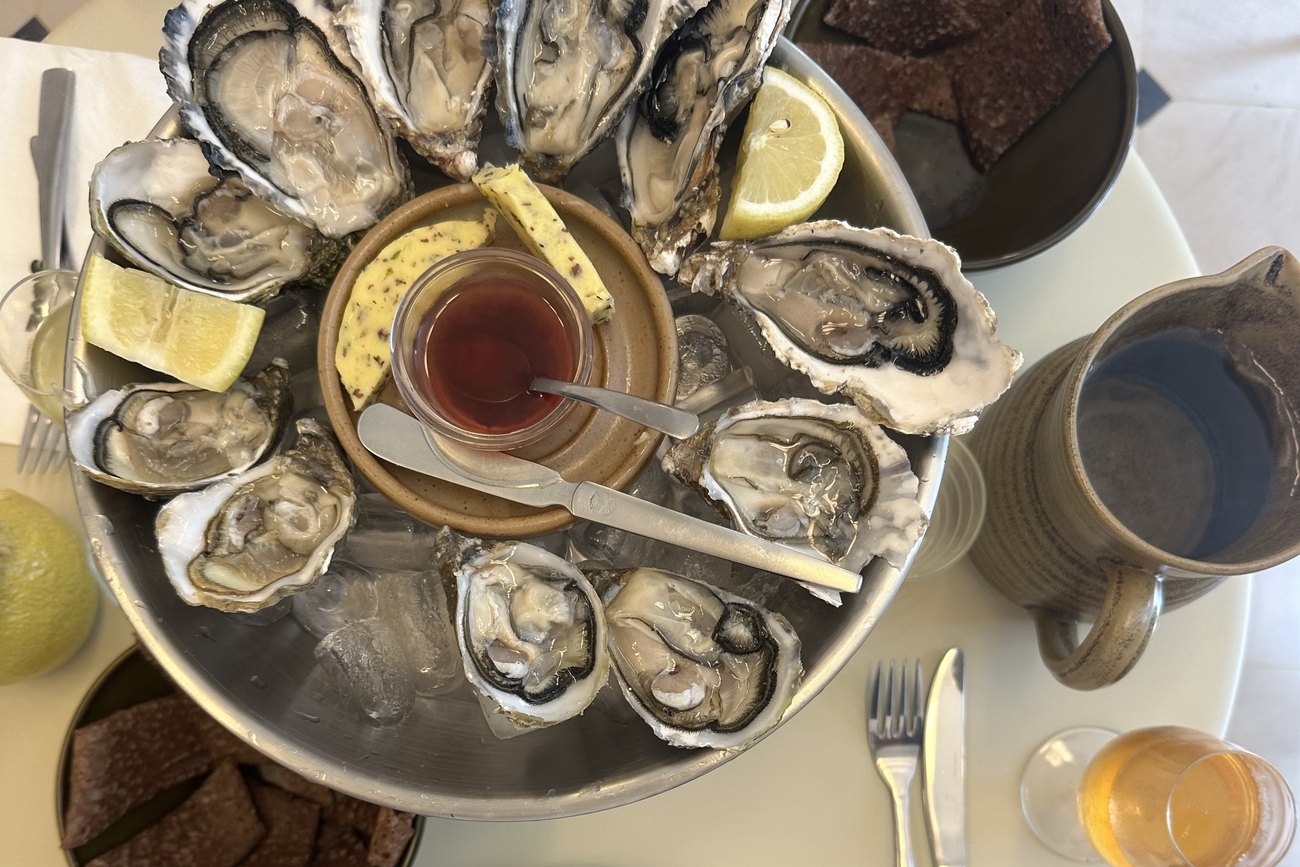
The appeal is not only the oysters themselves. It is the ceremony: cold shells arranged on crushed ice, rye bread or buttered bread nearby, a squeeze of lemon if you like it, and a glass of crisp wine or Champagne catching the light. In the right hands, a tasting becomes an introduction to French regional character, appetite and the art of lingering well.
What makes a Paris oyster tasting tour special?
An oyster bar in Paris is a meeting point between the capital and the coast. Fishmongers and brasseries have long received daily deliveries from Normandy, Brittany, Marennes-Oléron and beyond. Parisian diners know that an oyster is not simply salty. It may be creamy, cucumber-fresh, deeply mineral or almost sweet, depending on where it was raised, the water it filtered and the season.
A thoughtful tasting makes these differences legible. Rather than ordering a dozen of whatever is on the menu, you might compare several origins and notice how a robust Breton oyster differs from one finished in the shallow clay ponds, or claires, of Marennes-Oléron. The contrast can be surprisingly clear, even for a first-time oyster eater.
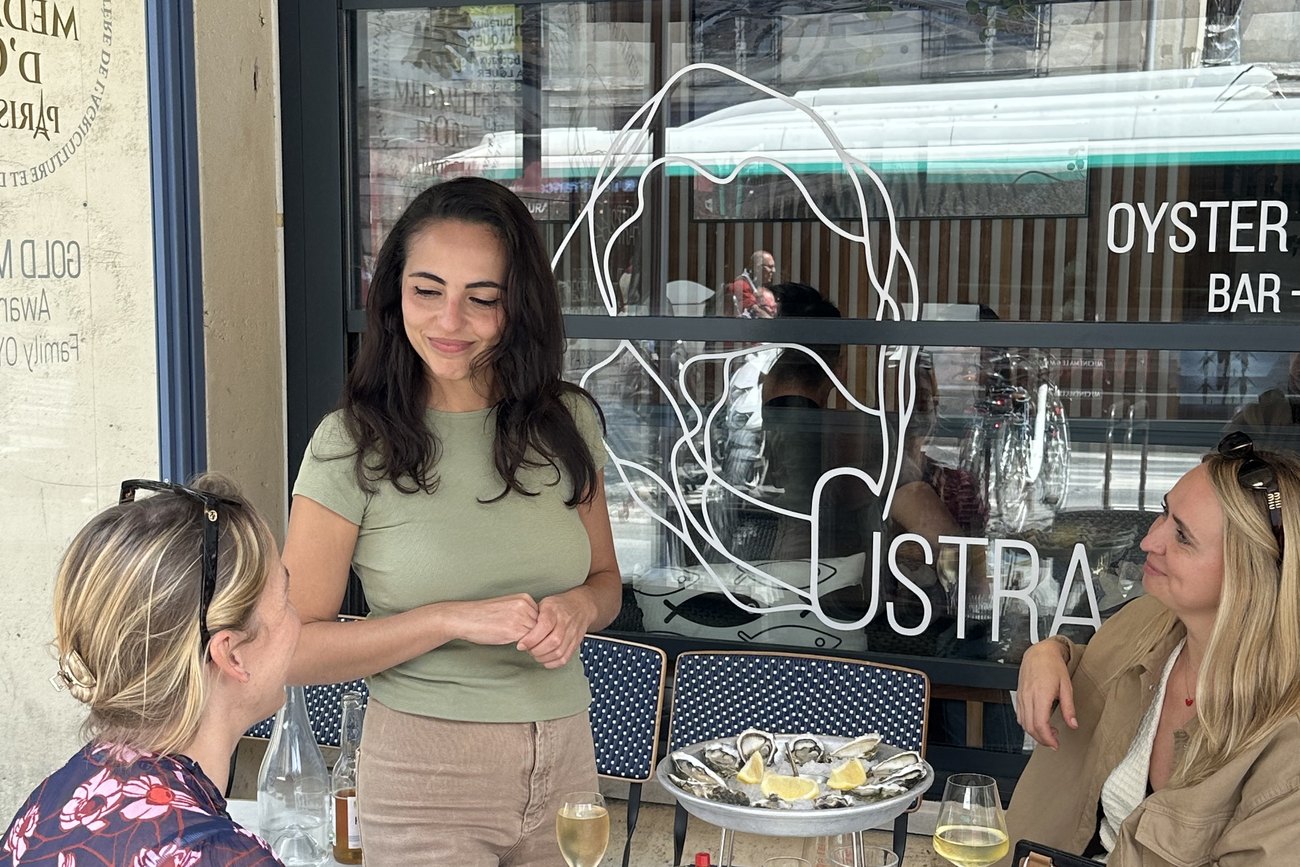
There is also a lovely sense of occasion in doing this in Paris. Between museum reservations and long walks, an oyster stop creates a pause with purpose. It is elegant but unforced, social without being noisy, and far more personal than another rushed meal near a major monument.
The French oyster vocabulary worth knowing
You do not need to arrive with a seafood glossary memorised. Still, a few words can make a menu feel less mysterious and help you order with confidence.
Most oysters served in France are huîtres creuses, or cupped oysters. These are the familiar, irregularly shaped shells, usually with a clean brine and a range of textures from light and delicate to rich and fleshy. Huîtres plates are native flat oysters. They are less common, often more expensive and prized for their complex, sometimes nutty flavour.
You may also see fines de claire and spéciales de claire. Both are oysters finished in the claire ponds of the Marennes-Oléron region. A fine de claire tends to be leaner and more delicate; a spéciale is fuller, with more flesh and a rounder, lingering taste. Neither is automatically better. It depends whether you prefer a brisk, saline oyster before dinner or something more generous to savour with wine.
Then there is the numbering. French oyster sizes work in reverse of what many visitors expect: a No. 3 is smaller than a No. 2, while a No. 1 is larger still. No. 3 is a popular choice for a tasting because it offers a satisfying mouthful without overwhelming the palate. A good guide can help you choose a progression that makes sense, beginning with the more delicate oysters before moving towards richer examples.
How to taste oysters without overthinking it
The first rule is reassuringly simple: there is no prize for performing expertise. Oysters are meant to be enjoyed, not analysed into submission. Still, a little attention changes the experience.
Look first. The oyster should be cold, glistening and resting in its own liquor, the clear seawater inside the shell. Its aroma should suggest the shore - fresh, mineral and alive - never aggressively fishy. Lift the shell from the flatter side, then bring it close enough to take in the scent before tasting.
Use the tiny fork to loosen the oyster if needed, but do not rush to cover it in lemon or vinegar. Taste it plain first. Let it sit on the tongue for a moment and chew once or twice. This is where texture and flavour appear: the initial salt, perhaps, then sweetness, iodine, hazelnut, melon or a clean metallic finish.
After that, dress it as you please. Lemon sharpens the impression of freshness, while mignonette - usually vinegar with finely chopped shallot and pepper - adds brightness and a gentle bite. Traditionalists may have opinions, but your favourite oyster is the one you genuinely enjoy. The only real misstep is treating the shell as a shot glass. Sip the liquor with the oyster rather than throwing it back in one theatrical motion.
Wine, Champagne and the case for keeping it simple
Oysters have a way of making a modest glass of wine feel wonderfully intentional. The classic partners are dry, high-acid whites: Muscadet from the Loire, Chablis, Sancerre or a mineral white from Alsace. Their freshness lifts the oyster’s salinity rather than competing with it.
Champagne is equally compelling, especially when the tasting is part of a celebratory afternoon. The fine bubbles clear the palate and echo the oyster’s brightness. A lean, dry style often works best, though the pleasure lies less in rules than in contrast and balance.
There are trade-offs. A heavily oaked white can flatten delicate oysters, while an intensely sweet wine may make them taste metallic. Beer can be excellent with a richer, more briny selection, and sparkling water is an entirely sensible choice if you want the flavours to remain front and centre. A good tasting is not a test of how much you drink; it is an invitation to notice what changes from one shell to the next.
When to take a Paris oyster tasting tour
Oysters are available in Paris throughout the year, thanks to modern farming and distribution. The old saying that oysters should only be eaten in months containing an ‘r’ reflects a time before reliable refrigeration, although it still captures the French affection for oysters in the cooler months.
Autumn and winter bring their own charm. This is when oysters take centre stage at holiday tables, and a cosy bar feels particularly inviting after a day in the cold. Yet spring and early summer can be just as pleasurable, especially if you prefer an aperitif-style tasting before an evening stroll. If you are travelling in the warmer months, ask about the day’s origins and freshness rather than assuming the season rules everything out.
Timing within the day matters too. A late afternoon tasting is ideal for couples and friends who want a graceful bridge between sightseeing and dinner. Midday suits those who would rather make oysters the main event, perhaps followed by a gentle walk through a market street or along the Seine. Because oysters are rich in sensation rather than volume, you can shape the experience around your appetite.
Choosing a tasting that feels personal
The best Paris oyster tasting tour is not necessarily the one with the longest list of shells. Look for an experience that takes place in an independent venue with a strong relationship to its suppliers, and leaves room for conversation. You should be able to ask where each oyster comes from, why it tastes the way it does and what to pair with it.
Small groups make a meaningful difference. At a crowded group meal, tasting notes can become background noise and individual preferences disappear. With a local guide and an intimate table, there is time to slow down, compare impressions and adjust the order if you find you love the creamy Normandy style more than the sharper Atlantic profile.
It is also worth considering your comfort level. If raw oysters are new to you, a guided tasting is gentler than confronting a vast menu alone. You can begin with a mild, smaller oyster and pair it with bread, wine or Champagne. If you are already an enthusiast, ask for a more focused comparison of regions, sizes or finishes. The experience should meet your palate where it is, not ask you to pretend.
A taste of Paris beyond the landmark list
Food carries geography in a way few other travel experiences can. An oyster tasting in Paris gives you Brittany’s tidal drama, Normandy’s cool waters and the Atlantic’s marshy complexity, all across a table in the capital. It also reveals something deeply Parisian: the city’s gift for gathering the best of France into a single, beautifully lived afternoon.
Rêverie Tours approaches this ritual as more than a tasting stop. It is a chance to hear the stories behind the shells, understand the small details that shape flavour, and soak up the beauty of a Parisian moment that does not need to be hurried.
Book your oysters for a day with a little space around it. Leave the next hour unplanned, take the long way along the footpath, and let the clean taste of the sea follow you through Paris.