A glass of Champagne can taste like lemon zest on warm chalk, ripe orchard fruit after rain, or a red-berried brioche pastry shared late into the afternoon. This Champagne terroir guide is for travellers who want to understand why. Beyond the familiar pop of the cork lies a remarkably precise landscape, where a few kilometres, a change of slope, or a different grape variety can alter the character of the wine.
For the fuller guide, see Paris Oyster Tasting Tour for Curious Palates.
Champagne is often treated as a single style: celebratory, elegant, sparkling. Yet its most compelling bottles are expressions of place. Knowing a little about that place makes a tasting more intimate. You stop searching for one correct flavour and begin noticing the story in the glass.
What terroir means in Champagne
Terroir is the French idea that wine carries the imprint of where it comes from. It includes soil and bedrock, certainly, but also climate, elevation, aspect, drainage, the grapes planted there, and the decisions made by growers and producers. In Champagne, human skill matters immensely because the region sits at the cool northern edge of viable grape growing. Blending, reserve wines and long cellar ageing have traditionally been ways of responding gracefully to that marginal climate.
That does not make terroir less relevant. Quite the opposite. The region’s cool conditions preserve high natural acidity, which gives Champagne its tension and longevity. A warm, south-facing slope may bring a little more fruit richness; a cooler site can retain a sharper, more floral line. The best wines make those distinctions feel vivid without becoming loud.
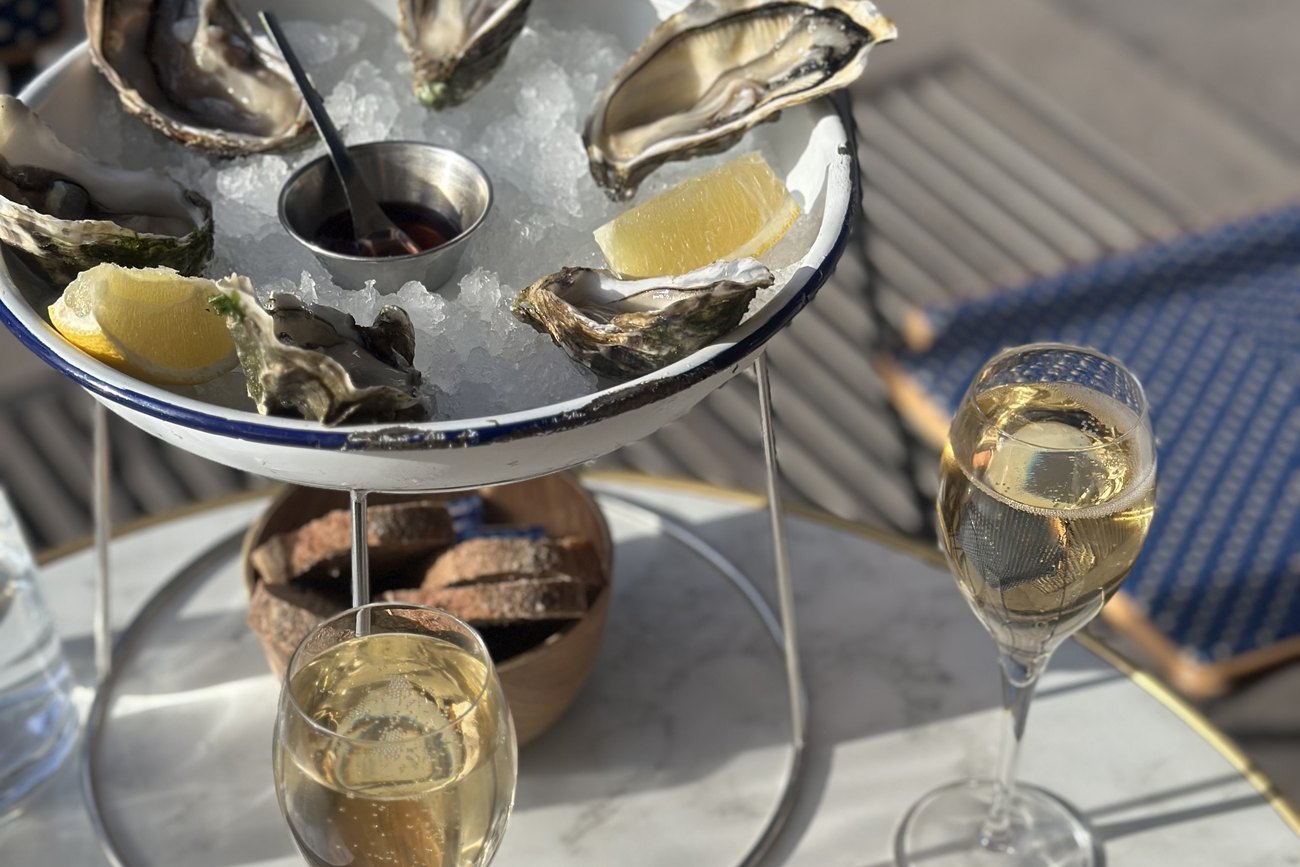
Champagne’s famous chalk is central to the conversation. Formed from ancient marine deposits, it stores water during dry periods and drains excess moisture in wet ones. Vine roots can reach deeply into fractured chalk, while the pale ground also reflects light and warmth towards the vines. The resulting wines are often described as saline, linear, citrus-driven or mineral. Those words can sound abstract until you taste a fine Blanc de Blancs with oysters, when the connection becomes rather immediate.
Not all Champagne is pure chalk, however. Clay, limestone, sand and marl appear across the region, particularly in the south. These soils can bring broader fruit, spice, structure or a gentler texture. Terroir is not a ranking system. It is a vocabulary for difference.
A Champagne terroir guide to the key regions
The Champagne appellation is broad enough to contain distinct personalities. If you are choosing between bottles in a Paris wine bar or planning a cellar visit, these areas offer a useful first sense of direction.
Montagne de Reims: Pinot Noir with poise
Despite its name, the Montagne de Reims is a rolling plateau and series of slopes rather than a dramatic mountain range. It is particularly associated with Pinot Noir, including villages such as Ambonnay, Bouzy, Verzy and Verzenay. Chalk-rich soils and varied exposures give growers material with both structure and freshness.
Champagnes with a strong Montagne de Reims influence often have red apple, wild strawberry, rosehip and subtle spice, alongside a firm, savoury shape. Pinot Noir here can lend a wine its backbone. In a blend, it may be the quiet architecture beneath the perfume and mousse.
Vallée de la Marne: generous Meunier
Following the Marne River west from Épernay, this region has more clay-rich soils and a slightly different mesoclimate. Meunier performs especially well here. Long considered the supporting player in the classic Champagne trio, Meunier is now receiving deserved attention from growers who prize its open-hearted fruit and early approachability.
Expect notes of yellow plum, peach, apple skin and soft spice, often with a rounder palate than a very chalky Chardonnay-led wine. Meunier can be especially charming in younger bottles, although serious examples from old vines can age with real grace. For a first-time drinker, it is often the most immediately generous route into Champagne.
Côte des Blancs: chalk, Chardonnay and precision
South of Épernay, the Côte des Blancs is one of Champagne’s most celebrated Chardonnay territories. Villages including Avize, Cramant, Oger and Le Mesnil-sur-Oger sit along slopes where chalk is close to the surface. The wines can be bright and finely drawn in youth, then gain hazelnut, pastry cream and smoky complexity with time.
A Chardonnay from this area may offer lemon, white flowers, green apple and a sea-spray-like finish. With extended ageing, the same wine can become creamy without losing its line. This contrast is part of its allure: delicacy with persistence, not softness for its own sake.
Côte de Sézanne and the Aube: a broader frame
The Côte de Sézanne, further south-west, is also largely Chardonnay country, though its soils include more clay. Its wines can feel riper and more rounded than those from the Côte des Blancs, while retaining welcome freshness.
Further south still, the Aube, centred around Bar-sur-Seine and Bar-sur-Aube, has Kimmeridgian marl - a mix of limestone and clay also found in nearby Chablis. Pinot Noir dominates. These are often more expressive, with cherry, plum, dried herbs and an earthy, vinous quality. They can feel almost like a fine still red wine that happens to have bubbles. For some palates, that generosity is irresistible; for others seeking an austere citrus edge, it may be less of a match. Neither preference is more sophisticated.
Grapes are part of the place
Chardonnay, Pinot Noir and Meunier account for almost all Champagne production, but they do not behave the same way in every village. Chardonnay amplifies freshness, florals and citrus, especially on chalk. Pinot Noir brings body, red-fruit character and length. Meunier offers supple fruit and a softer, often more immediately inviting profile.
A Blanc de Blancs is made from white grapes, usually Chardonnay. It can be feather-light or richly mature depending on its origins and ageing. A Blanc de Noirs is made from black grapes, typically Pinot Noir and Meunier, pressed gently so the juice remains pale. It often feels broader and more savoury. Rosé Champagne may be made by blending a little still red wine into white base wine, a permitted and distinctive local practice, or by brief skin contact.
These labels tell you something, but not everything. A Chardonnay from the Aube will not taste like one from Le Mesnil-sur-Oger, and Pinot Noir from Bouzy will not mirror Pinot Noir from the Aube. The grape is the instrument; terroir is the acoustics of the room.
Why blending does not hide terroir
There is a persistent idea that single-vineyard or single-village wines are inherently more authentic than blends. In Champagne, that is too simple. Blending is one of the region’s great arts. A house may combine dozens of wines from different villages, grape varieties and vintages to create a cuvée with a recognisable signature year after year.
That signature can still be deeply rooted in place. It simply speaks in a broader regional voice. Non-vintage Champagne, now often labelled multi-vintage, can offer extraordinary value because reserve wines add depth and continuity. Vintage Champagne is made from a single harvest and usually reveals the conditions of that year more clearly. A single-village or single-parcel bottling narrows the lens further.
Think of these as different ways of telling a story, rather than levels on a ladder. A beautifully composed multi-vintage wine can be more moving than a single-site bottle that has not found its balance.
How to read terroir on a Champagne label
Start with the producer. Large houses often have access to fruit across the appellation and excel at blending. Grower-producers farm their own vineyards and may offer a more site-specific perspective, though their styles vary enormously. The initials on a label can provide clues, but the producer’s name and stated origins are usually more useful than memorising codes.
Then look for a named village, a vineyard name, or a regional reference such as Côte des Blancs. “Grand Cru” and “Premier Cru” refer to an historic village classification, not necessarily to the quality of every bottle. They can be informative, but they should not replace curiosity about the producer, vintage and style.
Finally, consider dosage: the small addition of sweetened wine sometimes used after disgorgement. Brut is the familiar dry style, but dryness on paper does not tell the whole story. A low-dosage Champagne may feel especially taut and chalky, while a slightly higher dosage can soften acidity and make fruit feel more generous. With oysters or delicate seafood, many people enjoy the clean cut of Extra Brut. With a rich, creamy dish, a balanced Brut can be a lovelier companion.
Tasting Champagne with a sense of place
Serve Champagne cool rather than ice-cold, around 8 to 10°C for most bottles, and use a white-wine glass if you want to notice more aroma. A narrow flute preserves bubbles beautifully but can conceal some of the wine’s perfume. Give the glass a moment after pouring. The first scent may be fresh citrus; a few minutes later you may find toast, almond, dried flowers or red fruit.
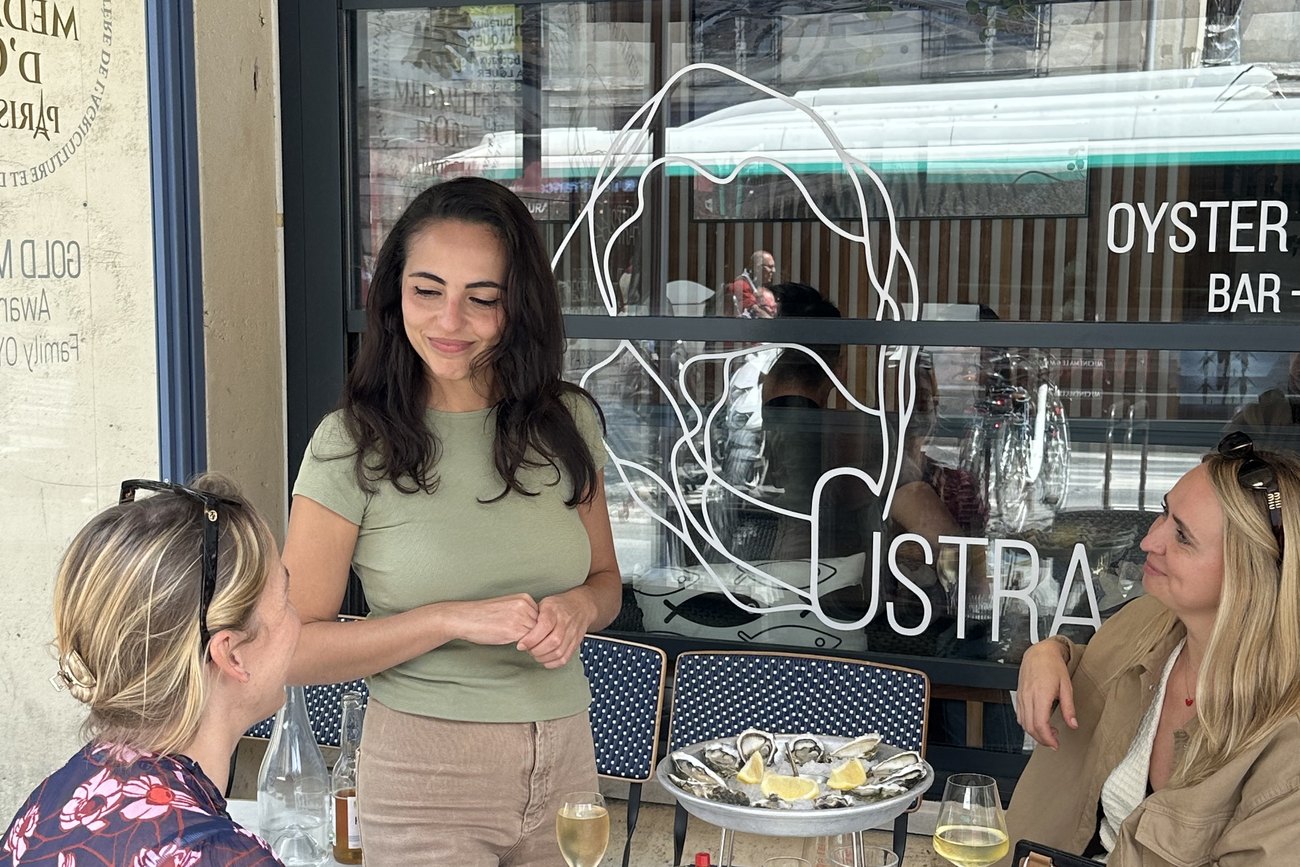
At a thoughtful Champagne tasting in Paris, compare two wines side by side rather than trying to memorise a long list. A Chardonnay-led Côte des Blancs bottling beside a Pinot Noir-led Aube wine can reveal more than a lecture ever could. Notice texture as much as flavour: is the wine creamy, brisk, smoky, broad, saline, delicate or firm?
The pleasure of Champagne terroir is that it rewards attention without demanding expertise. Choose a bottle that gives you a sense of a particular hillside, season or village, then drink it slowly enough to let that place arrive.