How to Navigate Roman Forums with a Clear Route
Learn how to navigate Roman forums with a thoughtful route, timed pauses and myth-rich context, from the Arch of Titus to Trajan’s Market in Rome today.
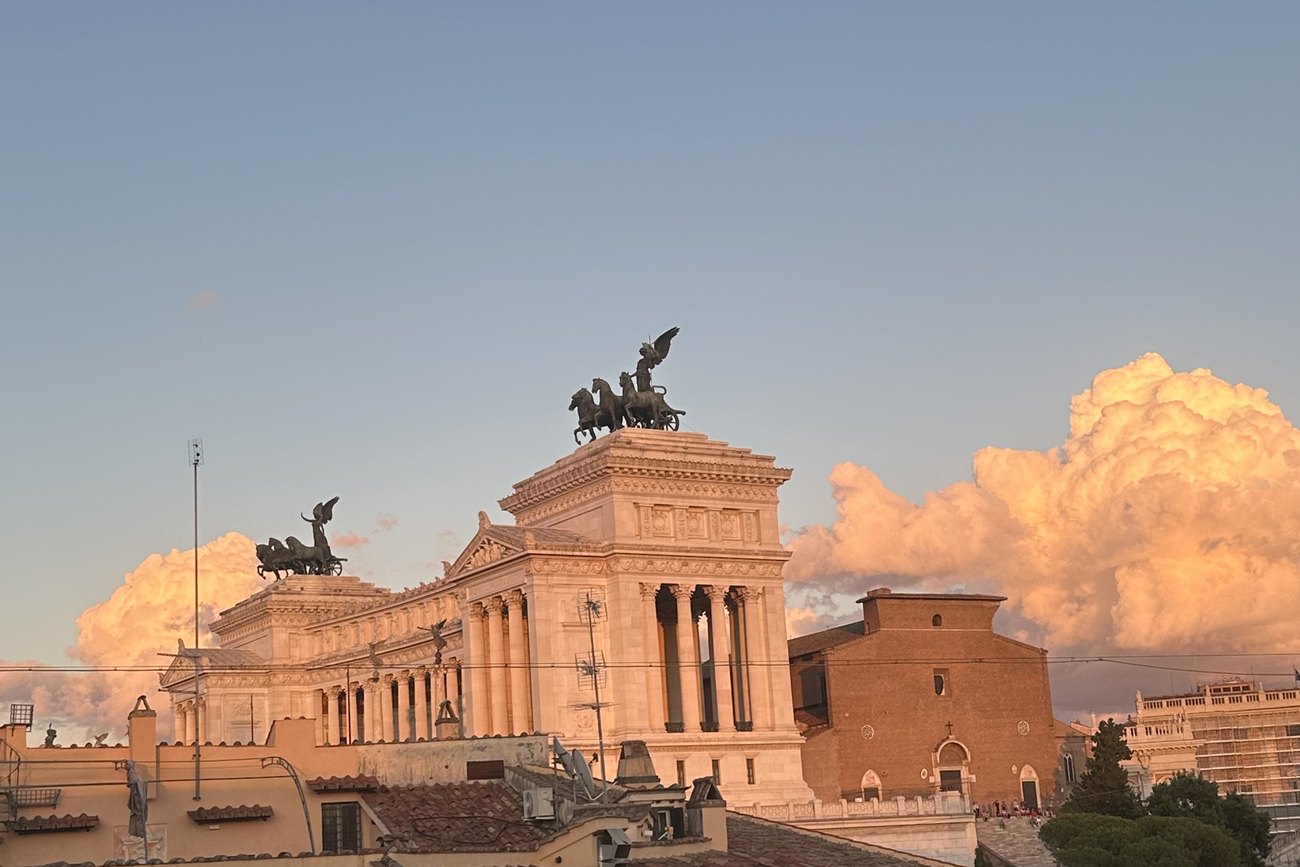
At the foot of the Capitoline Hill, Rome can feel less like a city of ruins than a stage after the actors have left. Columns catch the late-afternoon light, fragments of marble lie beneath umbrella pines, and every surviving stone seems to hold a rumour about a god, an emperor or a rather spectacular act of revenge. A Rome mythology walking tour gives these places their cast of characters again, turning an extraordinary archaeological landscape into a story you can follow on foot.
For the fuller guide, see How to Navigate Roman Forums with a Clear Route.
This is not mythology as a neat list of gods and their symbols. In Rome, divine stories were woven into politics, family reputations, military triumphs and the everyday rituals that governed public life. To walk the Imperial Forums with those stories in mind is to see why Jupiter was more than a thunderbolt, why Venus could legitimise an empire, and why an emperor might choose to build beside the temple of Mars.
The Imperial Forums were created over generations by rulers determined to make their mark on Rome. Julius Caesar began the sequence with his own forum, and emperors including Augustus, Nerva and Trajan followed. Their buildings were practical civic spaces, but they were also carefully composed statements about who had the right to rule.
Mythology did much of the persuasive work. Rome’s leaders did not simply claim to be powerful. They placed themselves within an inherited, celestial story. Caesar’s family traced its line to Venus through Aeneas, the Trojan hero whose journey became central to Rome’s origin myth. Augustus, Caesar’s adopted heir, embraced that connection with great care. The message was elegant and unequivocal: the future of Rome had divine approval.
Standing in the Forum of Caesar, the Temple of Venus Genetrix becomes more than an architectural remnant. Venus Genetrix, or Venus the Mother, represented the goddess as ancestor and protector of the Julian family. The temple made a political claim visible in stone. It also reveals a Roman habit that can feel startlingly modern: using image, story and public space to shape a reputation.
A thoughtful mythology walk lingers over these choices. It asks who was meant to see them, what they were meant to believe, and whether they believed it. The answer, as ever in Rome, is complicated. Faith, theatre and power often shared the same address.
Venus is often reduced to the goddess of love, but her Roman identity was far broader. She represented fertility, prosperity, beauty and the ancestry of a people who understood themselves as descendants of Trojan survivors. In the forum dedicated by Caesar, her image bound a prominent family to Rome’s grandest origin story.
This is where mythology becomes personal rather than ornamental. A guide can show how a seemingly distant goddess became part of an emperor’s public language, then connect that claim to the sculptures, temples and ceremonial routes around you. The mythology is not floating above the ruins. It is embedded in their purpose.
Mars was not merely the god of war. For Romans, he was also the father of Romulus and Remus, the twins whose story begins with abandonment and ends with the foundation of Rome. His presence in the Forum of Augustus was therefore deeply strategic.
Augustus built the Temple of Mars Ultor, Mars the Avenger, after the assassination of Julius Caesar and the subsequent civil wars. The title honoured vengeance for Caesar’s death, but the building also suggested restored order after violence. It is a revealing contradiction: a temple to a war god offered as proof that peace had returned.
The scale of the forum makes more sense once you recognise the emotional force of that idea. This was a place where military victories, legal decisions and sacred memory met. A Rome mythology walking tour lets you read the site not only as a collection of ancient remains, but as a carefully directed experience for Roman citizens.
In the Forum of Nerva, Minerva appears as a guardian of wisdom, craft and strategic intelligence. She was associated with clear judgement rather than brute strength, making her a fitting divine presence in a narrower, more transitional forum. Though much of the complex has disappeared, its surviving colonnade and the famous reliefs once carried a richly visual programme.
Minerva’s presence offers a useful counterpoint to Mars. Roman mythology had room for force, certainly, but also for discipline, skill and foresight. These were qualities Rome’s leaders wanted associated with their rule. In a city that prized rhetoric, engineering and military strategy, wisdom was never an abstract virtue.
Above the forums rises the Capitoline Hill, long connected with Jupiter Optimus Maximus, Rome’s supreme god. His temple once dominated the hilltop, a sacred landmark visible across the city. Jupiter represented authority, oaths, law and the cosmic order that Roman power claimed to uphold.
Even when the temple itself is not the central stop, its position matters. Looking towards the Capitoline, you can sense how geography and belief reinforced each other. The hill was not simply high ground. It was a sacred vantage point from which Rome imagined its relationship with the gods.
The pleasure of mythology is often in its drama: metamorphoses, jealousies, impossible births and heroes who make terrible decisions. Yet the most compelling stories in Rome are the ones that show how myth touched ordinary life.
Romans made offerings before journeys, consulted signs before public decisions and marked the calendar through religious festivals. Household shrines honoured protective spirits. Priests held influential public roles. A temple was not a museum piece or an aesthetic backdrop. It was a working part of civic life.
That context changes how you look at the forums. The ruins are quieter now, but they were once full of movement: senators in white togas, litigants, merchants, soldiers, religious processions and people simply passing through. Incense, dust, animal sacrifice, arguments and formal speeches all belonged to the atmosphere. Mythology gave that busy world a shared vocabulary.
It is also worth resisting the temptation to treat every ancient story as settled fact. Roman myths changed across centuries, borrowed from Greek traditions and were adapted to serve new political needs. Venus, Mars and Minerva had Greek counterparts, but Roman worship gave them distinct roles and local meanings. A good guide makes room for those overlaps without flattening them into a familiar schoolbook version.
The Imperial Forums can be overwhelming when approached as a checklist of dates and monuments. There is a great deal to see, much of it partially preserved, and the visual layers are not always obvious at first glance. The value of a mythology-led walk is its focus. Rather than trying to absorb all of ancient Rome in an afternoon, you follow one elegant thread through its most resonant spaces.
A small group changes the rhythm, too. You can pause where a view opens between the ruins, ask why a particular deity mattered, or spend a few extra minutes with a story that catches your imagination. It is the difference between being delivered information and being invited into a conversation.
Rêverie Tours approaches the Imperial Forums as a living narrative rather than a parade of facts. Over roughly two to two-and-a-half hours, the walk can bring together the city’s founding legends, the ambitions of its emperors and the intimate human desires beneath monumental architecture: belonging, status, grief, devotion and the wish to be remembered.
Choose a time when you are willing to walk slowly. The forums reward attention, and the best moments often arrive between the headline sites: a perspective towards the Capitoline, a detail in a carved relief, a sudden understanding of how one forum sits against another. Comfortable shoes are essential, as Roman paving can be uneven, and a water bottle is sensible during the warmer months.
Morning brings clearer light and a fresher pace. Later in the day, the stones take on a warmer colour and the city begins to soften around the edges. Neither is universally better. It depends on whether you prefer an energetic start or the romance of Rome nearing evening.
Come with curiosity rather than a need to memorise every name. The enduring gift of a mythology walk is not a perfect chronology. It is the ability to look at a temple foundation, a triumphal avenue or a hill above the city and recognise the story Rome was telling about itself. Once you hear it, the ancient city feels less remote - and the next time you pass a god in marble, you may find they have something rather pointed to say.
Explore our Rome experiences: mythology among the Imperial Forums, and a snacks and facts walk through the city’s hidden streets.
Explore Rome Tours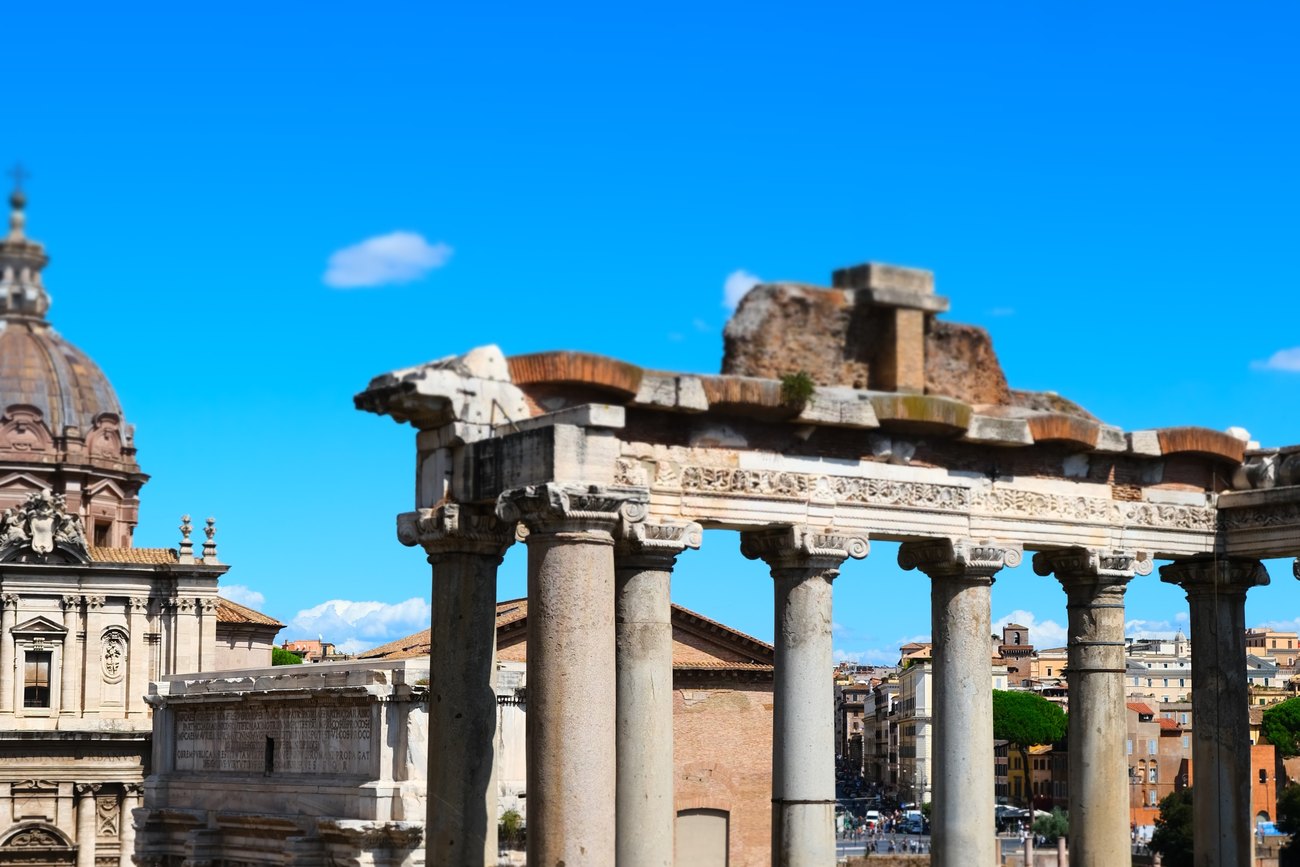
Learn how to navigate Roman forums with a thoughtful route, timed pauses and myth-rich context, from the Arch of Titus to Trajan’s Market in Rome today.
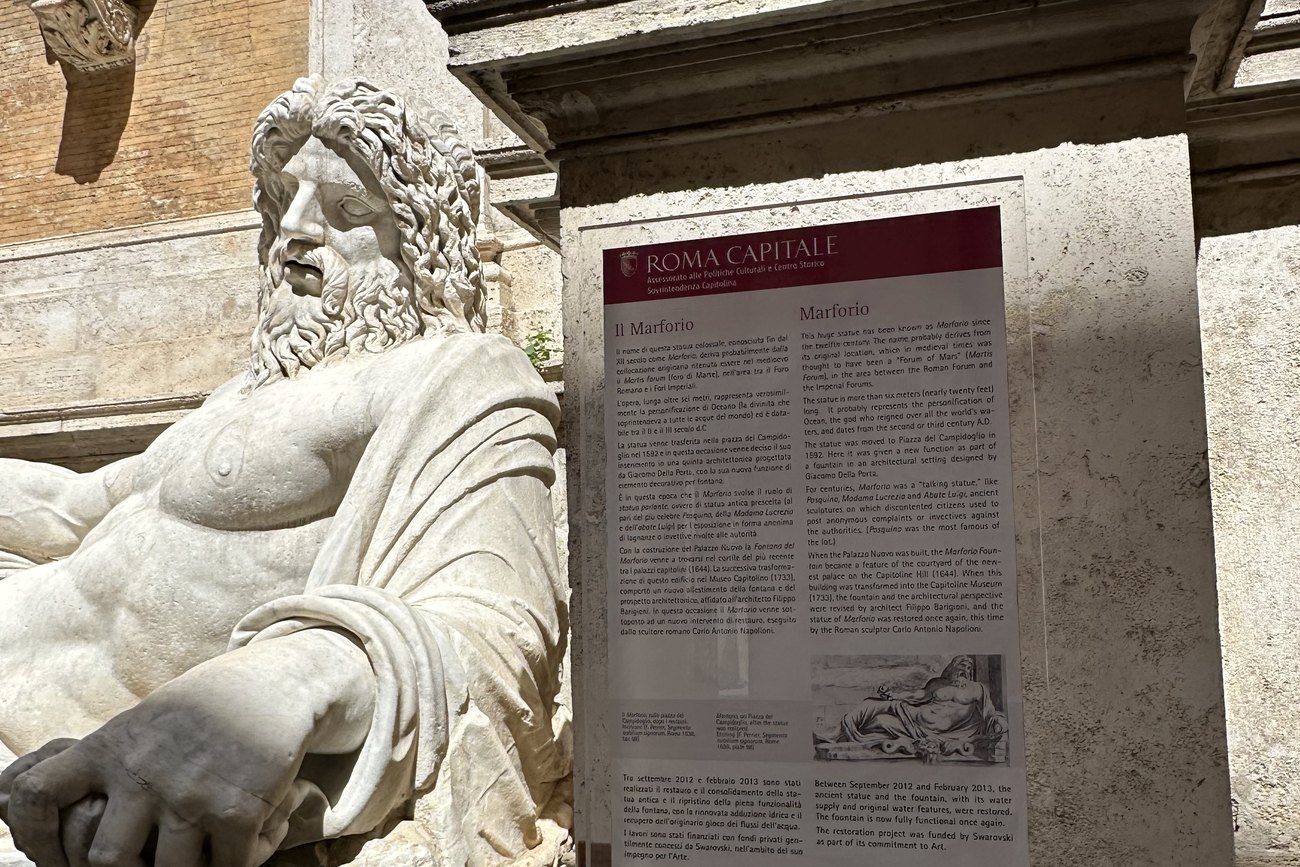
Roman ritual symbols guide for travellers: read altars, laurel, incense and sacred animals in Rome’s forums, temples and museum collections with fresh eyes