How to Navigate Roman Forums with a Clear Route
Learn how to navigate Roman forums with a thoughtful route, timed pauses and myth-rich context, from the Arch of Titus to Trajan’s Market in Rome today.
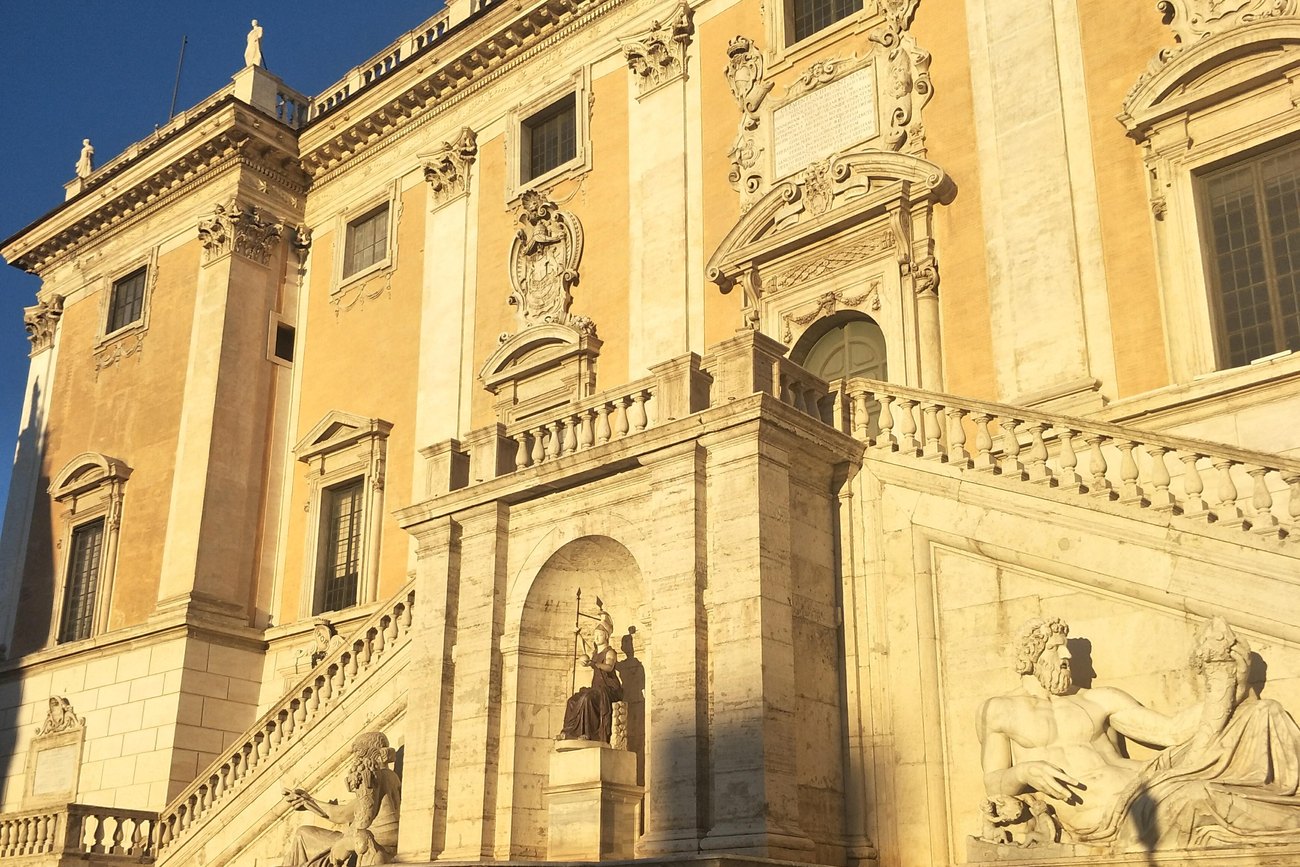
A marble head without its body can still tell you who held power. A bird perched above an altar, a wreath pressed into a brow, a clenched hand holding a scroll: the symbols of Roman emperors were designed to make authority visible at a glance. In a city where broken columns and sculpted fragments appear almost casually, learning this visual language changes the way Rome feels. The Imperial Forums stop being a handsome ruin and become a carefully staged argument about power, family, victory and divine favour.
For the fuller guide, see How to Navigate Roman Forums with a Clear Route.
For Roman rulers, symbolism was not decorative excess. Most people would never hear an emperor speak, and many could not read the grand inscriptions set up in his honour. Yet they could recognise an eagle, a laurel wreath or an idealised portrait. These signs appeared on coins, monuments, military standards, temples and statues across the empire. They carried Rome's message from the Forum to a provincial market town.
The Roman emperor was never simply a king in a crown. In fact, Romans were deeply suspicious of kingship after the fall of their early monarchy. Augustus, Rome's first emperor, was particularly careful about this. He presented himself as princeps, or first citizen, while accumulating powers no ordinary citizen could possess.
That tension shaped imperial imagery. A symbol needed to suggest command without appearing crude, tradition without weakness, and a connection to the gods without always claiming to be a god. The most successful emperors made their authority seem both exceptional and inevitable.
It also depended on context. An eagle on a battlefield had a different force from an eagle on a funerary monument. A laurel crown on Augustus suggested a victorious leader who had restored peace; on a later ruler, it might signal military success or a deliberate claim to Augustan legitimacy. Rome is most rewarding when you resist the temptation to treat every image as a simple label.
The Imperial Forums are the ideal place to look slowly. Built over generations by Julius Caesar, Augustus, Nerva and Trajan, they were not one unified civic square. Each complex framed its patron as a ruler with a particular relationship to Rome's past and future.
No symbol feels more Roman than the eagle. The aquila was the sacred standard of a Roman legion, carried into battle and guarded with extraordinary devotion. Its presence could therefore evoke military discipline, conquest and the protection of Rome's armies.
But the eagle also belonged to Jupiter, king of the gods. This gave it an even grander role after an emperor's death. During an imperial funeral, an eagle could be released from the pyre to represent the ruler's soul rising to the heavens. In reliefs and sculpture, the bird may point to apotheosis, the transformation of a deceased emperor into a god.
Look for eagles around monumental settings, especially near temples, triumphal imagery and imperial memorials. They do not always mean the same thing, but they almost always announce that the scene is operating on a scale larger than one man's lifetime.
The laurel wreath is more restrained than a crown of gold, which is precisely why it mattered. Laurel had long been associated with Apollo and with victory. Generals could wear it in triumph, and emperors adopted it as a sign that their success was not temporary good fortune but a quality of rule.
Augustus made especially elegant use of laurel. Branches were placed beside the entrance to his house on the Palatine, suggesting that his private home was also a public symbol of Rome's safety. His portraits often show the calm, youthful face familiar from museum rooms and guidebooks, crowned with an understated wreath. The message is not extravagance. It is control.
When you see laurel in Rome, notice what sits beside it. Paired with armour, it speaks of victory; paired with an altar or sacrifice, it can imply piety; paired with a portrait, it lends the sitter a quiet aura of achievement.
The corona civica, made from oak leaves, carried a more pointed message. In the Roman Republic, it was awarded to someone who had saved the life of a fellow citizen in battle. Augustus received it in recognition of having, in the official language of the age, saved Roman citizens and restored order after civil war.
It was an extraordinarily clever symbol. Rather than declaring that Augustus had conquered Rome, it implied that he had rescued her. The crown could appear above doors, in sculpture and on coins, giving an imperial regime a reassuringly civic face.
This is one of the great Roman habits to watch for: power translated into a moral virtue. Emperors did not merely win. They brought peace. They did not merely rule. They protected citizens. Such claims deserve a raised eyebrow, but they also reveal how carefully the regime understood public feeling.
Some of the most potent symbols are harder to spot in surviving marble because their original colour has vanished. Imperial purple, famously associated with the costly dye made from Mediterranean shellfish, distinguished the ruler's clothing and authority. Not every purple garment signalled an emperor, and the exact rules shifted over time, but the colour increasingly became bound to imperial status.
In statues, look instead at the surviving attributes. A sceptre expresses rightful command. A globe, sometimes topped by a small figure of Victory, suggests dominion over the known world. A hand raised in address, known as the adlocutio gesture, turns a silent statue into a commander speaking to troops or citizens.
These details matter because Roman portraiture was rarely neutral. The body was as deliberate as the face. An emperor shown in a toga might be framing himself as a civic leader. In armour, he becomes a victorious commander. Half-clothed like a Greek god or hero, he moves into a more elevated, almost timeless realm.
Roman imperial portraits can feel strikingly individual. Vespasian's lined face, for instance, projects a blunt, seasoned practicality after the chaos of civil war. Yet even the most recognisable emperor was shaped by artistic intention. A portrait was expected to make a case.
Augustus appears perpetually youthful, even when he was no longer young. Hadrian's beard aligned him with Greek learning and philosophy. Caracalla's sharply turned head and intense gaze make him seem impatient, watchful and martial. These are not accidental moods caught in stone. They are public identities, repeated across an empire with remarkable consistency.
A useful way to look is to ask two questions: what is this emperor trying to make you feel, and who was meant to see it? A colossal statue in a forum, a small coin in a purse and a carved relief on an arch all reached different audiences, but the central message travelled between them.
Imperial symbols did not only sit on pedestals. They shaped Rome's architecture. A triumphal arch was a gateway into memory, presenting military success as something the city itself could walk beneath. Reliefs showed captives, spoils, soldiers, gods and the emperor in commanding scale. The arrangement made victory appear orderly, blessed and permanent.
Trajan's Column offers a particularly rich example. Its spiralling relief tells the story of the Dacian Wars in dense, cinematic scenes. Trajan appears repeatedly, not as a distant god but as a tireless organiser: addressing troops, conducting rituals, receiving envoys and overseeing construction. This is propaganda, certainly, but sophisticated propaganda. It sells competence as much as conquest.
The Arch of Constantine adds a useful complication. Built in the fourth century, it incorporates sculptures taken from earlier monuments of Trajan, Hadrian and Marcus Aurelius. This was not simple recycling. By placing images of admired earlier emperors into a new monument, Constantine wrapped himself in their prestige. In Rome, even marble can be quoted.
It is tempting to turn every leaf, bird and draped figure into a precise code. Sometimes the evidence supports that confidence; often it does not. Ancient monuments were repaired, moved, stripped of metal, re-used and restored over centuries. A statue may have lost its identifying head or attribute. A relief can be so damaged that several readings remain possible.
The pleasure lies in holding both certainty and mystery. Start with the setting. Is the image in a temple, a forum, a bath complex or an arch? Then look for the combination of clues: costume, hairstyle, posture, nearby gods, military objects and inscriptions. One eagle alone may be ambiguous. An eagle beside a veiled funeral procession is much less so.
For a more intimate encounter, visit the Forums early or later in the afternoon when the stones soften in the Roman light and there is room to pause. On a mythology walk with Rêverie Tours, these surviving signs become part of a living story rather than a set of names to memorise.
Carry this small habit with you through Rome: whenever a carved face, wreath or wing catches your eye, ask what sort of ruler it wants you to imagine. The answer may be glory, peace, piety or power. Often, beautifully, it is all four at once.
Explore our Rome experiences: mythology among the Imperial Forums, and a snacks and facts walk through the city’s hidden streets.
Explore Rome Tours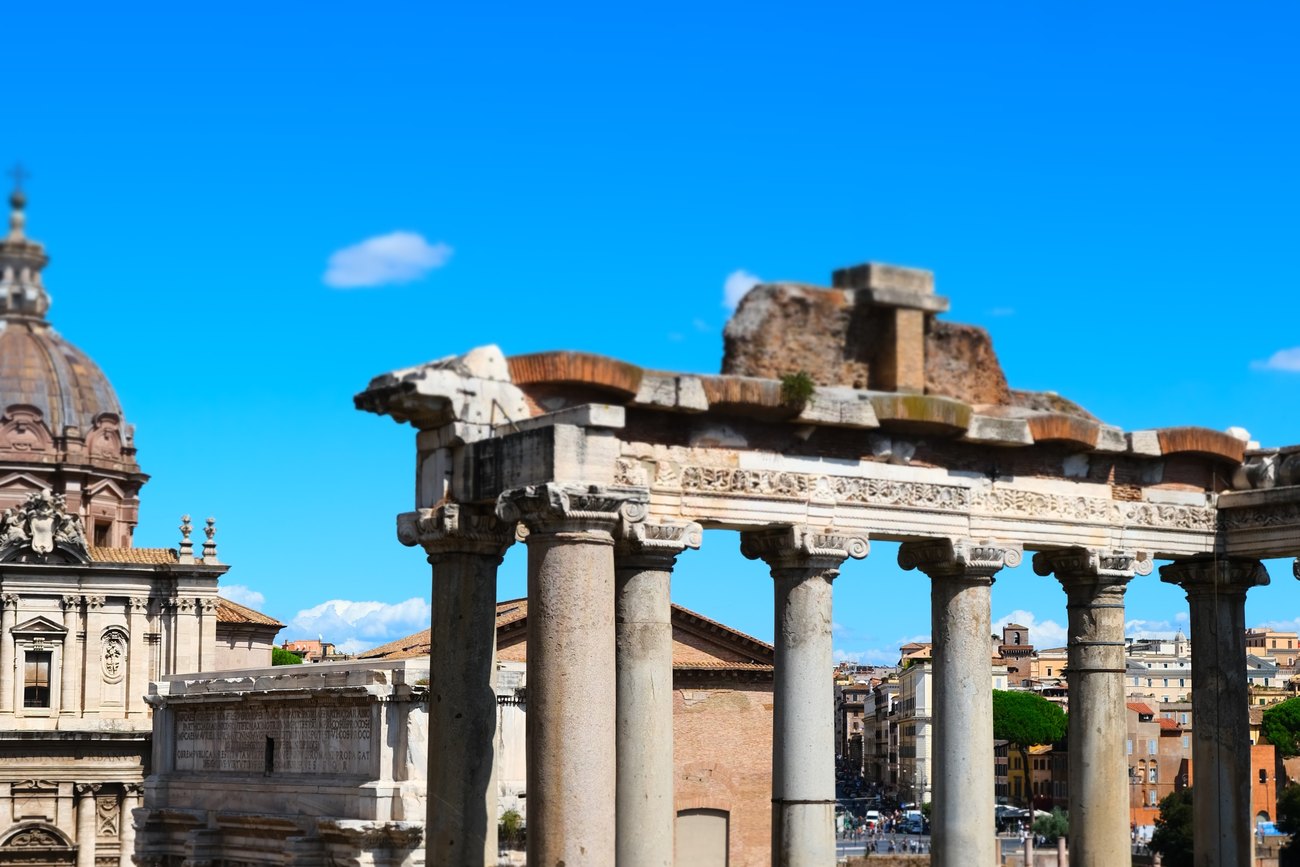
Learn how to navigate Roman forums with a thoughtful route, timed pauses and myth-rich context, from the Arch of Titus to Trajan’s Market in Rome today.
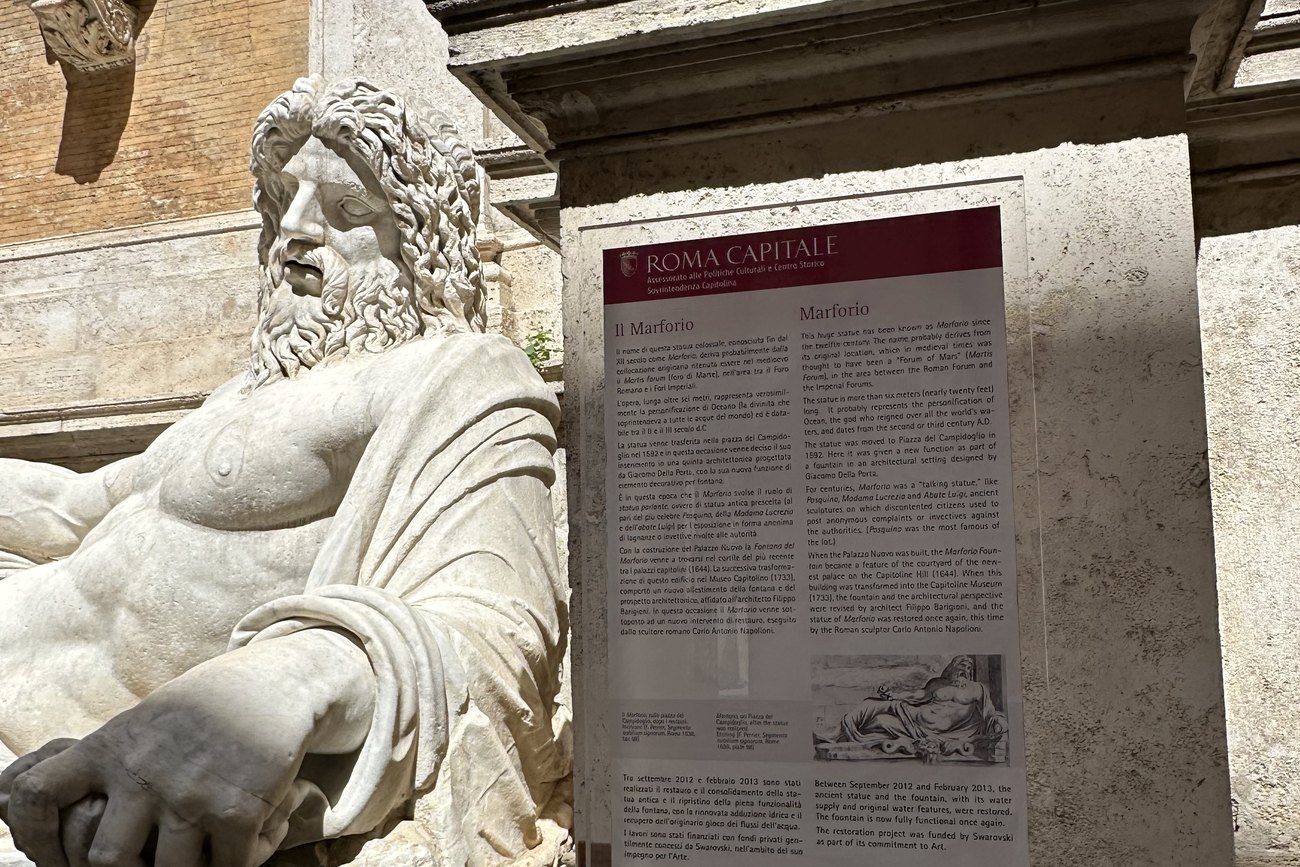
Roman ritual symbols guide for travellers: read altars, laurel, incense and sacred animals in Rome’s forums, temples and museum collections with fresh eyes