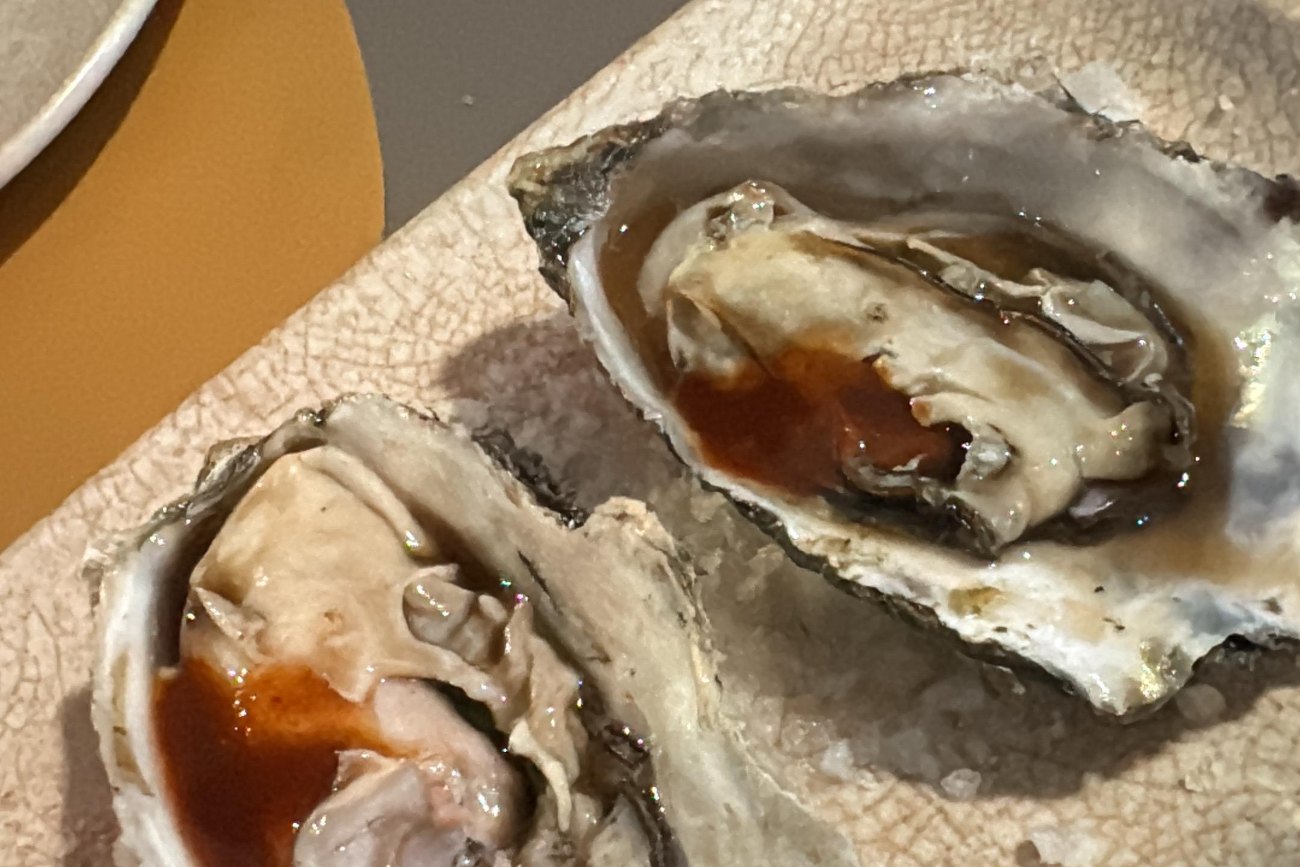
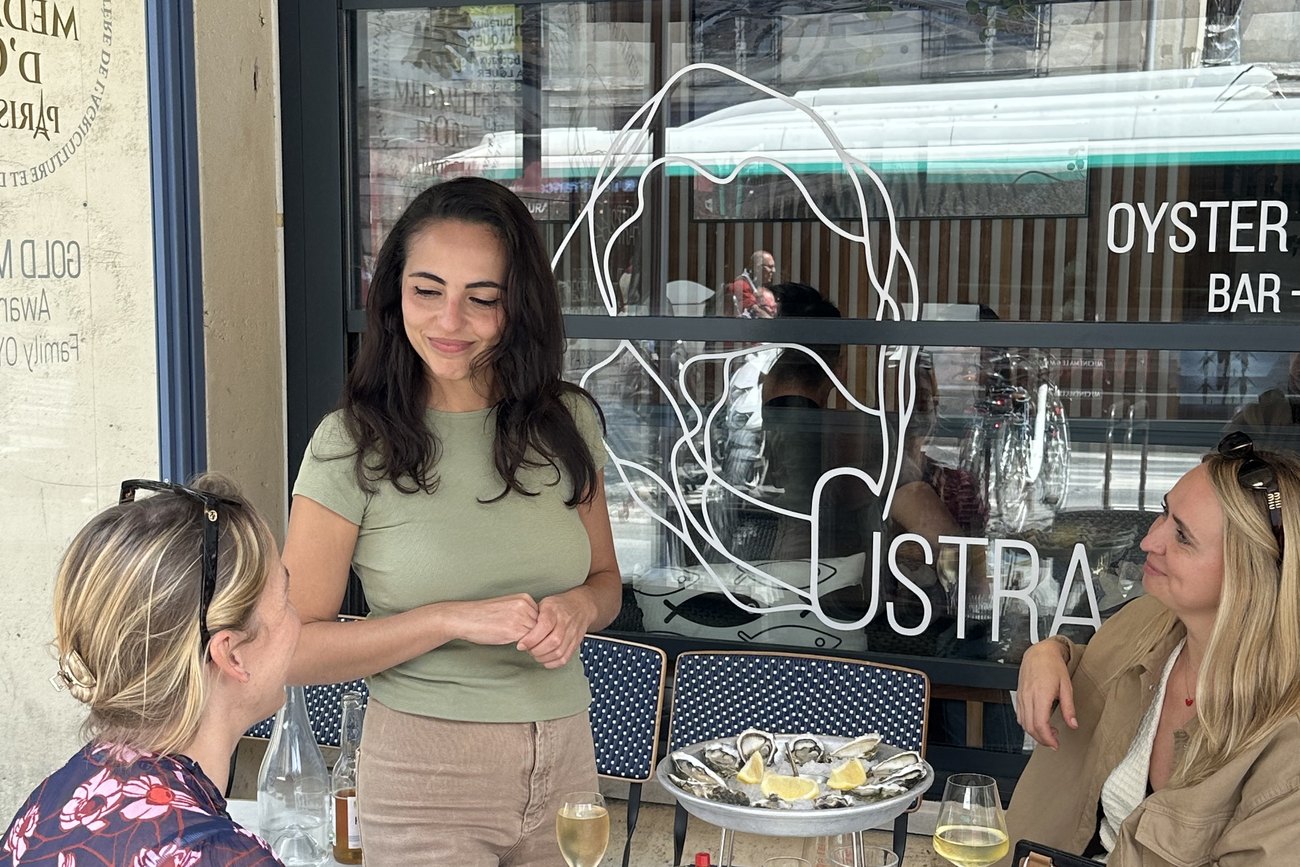
An oyster arrives on crushed ice, its shell holding a little pool of sea water. Beside it, a flute of Champagne catches the afternoon light. The pairing looks effortless, but knowing how to pair oysters with Champagne turns a pretty Parisian ritual into something far more memorable: a conversation between salt, stone, citrus and bubbles.
For the fuller guide, see Paris Oyster Tasting Tour for Curious Palates.
The best match is not simply any oyster with any sparkling wine. Oyster varieties change with their waters, seasons and growers. Champagne changes with grape blend, ageing and dosage. A thoughtful pairing lets both feel more vivid, without making either one fight for attention.
Why oysters and Champagne belong together
Oysters carry a clean salinity that can feel almost metallic, along with notes of cucumber, hazelnut, seaweed or sweet cream depending on where they were raised. Champagne brings acidity and effervescence. Its bubbles lift the oyster’s richness from the palate, while its brightness refreshes rather than overwhelms.
There is also a textural reason the pairing works. A plump oyster is soft, cool and silky. Fine bubbles create contrast, then leave the mouth ready for the next shell. This is why the combination feels so natural at a Parisian bar before dinner, especially when the city is beginning to glow and nobody is in a rush to leave.
The small detail that matters most is balance. Very sweet Champagne can make an oyster taste oddly sharp. A heavily oaked or dramatically powerful bottle can bury a delicate shellfish. In most cases, freshness, minerality and restraint are the qualities to seek.
How to pair oysters with Champagne by oyster style
Delicate oysters: choose a bright Blanc de Blancs
Fine, delicate oysters with a crisp finish call for a Champagne with similar poise. Blanc de Blancs, made entirely from Chardonnay, is often the most graceful place to begin. Expect lemon, white flowers, green apple and chalky mineral notes, with an energetic line of acidity.
This is a beautiful match for smaller oysters that taste clean and lightly saline rather than intensely marine. The wine does not add weight; it sharpens the oyster’s freshness and lets its subtleties remain intact. If you are ordering a mixed platter, a Blanc de Blancs is also a generous choice because it will suit the lighter shells across the board.
Creamy, fleshy oysters: try a balanced Brut
Larger oysters can have a fuller, creamier texture and a gentler finish. Here, a classic non-vintage Brut Champagne is often ideal. Usually blending Chardonnay, Pinot Noir and Pinot Meunier, it brings more roundness than a pure Chardonnay bottle while retaining the dry, cleansing edge oysters need.
Look for a Brut with citrus, orchard fruit and a little brioche character rather than one that feels overtly rich. Those subtle bakery notes can echo the oyster’s savoury depth, particularly when the shells are served simply with good bread and butter. The pairing feels relaxed but polished - exactly right for a long apéritif that might turn into dinner.
Briny, mineral oysters: reach for Extra Brut or Brut Nature
Some oysters arrive with a powerful hit of sea spray and iodine. They are thrilling, but they need a Champagne with enough cut to meet them. Extra Brut and Brut Nature styles contain very little added sugar, creating a drier, more direct impression.
These bottles tend to show stone, citrus peel and saline flavours with particular clarity. Paired with a briny oyster, they create a clean, almost coastal resonance. This is not necessarily the choice for a first-time oyster eater, as the combination can be bracing. For lovers of lean whites and sharply defined flavours, however, it is hard to beat.
Richer oysters: consider a little Pinot Noir
If the oysters are notably meaty, or if they are served with a restrained warm preparation, a Champagne with more Pinot Noir can be compelling. Pinot brings body, red-fruit undertones and a broader shape through the middle of the palate. It should still be dry and lively, but it has the presence to stand beside richer textures.
This is where context matters. A concentrated vintage Champagne may be magnificent, but it can be more contemplative than refreshing. Save the grandest, most complex bottle for later in the meal if the oysters are raw and delicate. Let the opening pairing remain light on its feet.
The details that can change the match
The oyster itself comes first. Ask where it is from and whether it is known for sweetness, creaminess or strong salinity. In France, many oyster menus identify the producer and region, and a good server will happily point you towards a style. You do not need to memorise every coastal appellation. A simple question - “Which are your most delicate oysters?” - gives you the information you need.
Then think about what is on the table. A squeeze of lemon intensifies acidity, making a crisp Blanc de Blancs or Extra Brut especially satisfying. Mignonette, with its vinegar and shallot, also favours dry Champagne. If you add a generous amount of spicy sauce, though, the quiet detail in the wine will disappear. A few drops can be enjoyable; drowning the oyster is another matter.
Temperature matters more than people think. Champagne should be chilled, but not frozen into silence. Around 8 to 10°C allows its aromas to emerge while preserving its tension. Oysters should be properly cold and freshly shucked, without puddles of melted ice diluting their liquor.
Glassware has its role, too. The narrow flute is glamorous, but a tulip-shaped glass often gives more room for the Champagne’s aromas, particularly if you have chosen a distinctive grower bottle. There is no need to be formal about it. What matters is that the wine feels alive rather than flat or over-chilled.
A Parisian way to order with confidence
In Paris, resist the urge to turn the experience into a technical tasting before the first sip. Start with half a dozen oysters each if you are sharing, then order a bottle of Champagne that suits the table rather than chasing a label. A knowledgeable bar or seafood restaurant may offer a house Champagne that is exceptionally well chosen for the food.
For two people, a bottle is unhurried and convivial, particularly if oysters are only the first chapter of the evening. For a lighter stop between galleries, bookshops or a late stroll, one or two glasses can be enough. If you prefer to compare styles, ask whether there are pours by the glass: a classic Brut followed by a Blanc de Blancs reveals how much character a change of grape composition can bring.
A small word on size: larger oysters are not automatically better. Smaller shells often offer remarkable precision, while larger ones can be lush and satisfying. Order a range if available, taste from delicate to robust, and keep the Champagne constant. It is one of the simplest ways to notice the difference place makes.
Beyond the obvious pairing
Champagne and oysters have become a symbol of celebration, yet their real charm is their lack of ceremony. They can be as fitting at a marble counter in the late afternoon as at a candlelit table on a special night. The best pairing is not always the rarest oyster or the most prestigious bottle. It is the one that suits the mood, the season and the people gathered around the ice-filled platter.
On Rêverie Tours’ oyster, wine and Champagne tastings, this is the pleasure worth lingering over: not checking a famous Parisian experience off a list, but learning to recognise your own preference. Perhaps you love the laser-bright lift of a Chardonnay-led Champagne with a delicate oyster. Perhaps you prefer a rounder Brut beside a plumper shell. Paris gives you permission to find out slowly.
Order the oysters, choose a dry Champagne with enough freshness to meet the sea, and take the first sip before you decide anything. A good pairing does not demand expertise. It only asks that you stay present long enough to taste the city, the coast and the small sparkle of the moment together.