French Market Etiquette Guide for Paris Mornings
A French market etiquette guide for Paris, with graceful advice on greetings, produce, cheese and pacing your visit to Marché d’Aligre with calm assurance.
At 3 pm, Saint-Germain-des-Prés has a particular talent for making a simple decision feel deliciously difficult: a lacquered chocolate éclair, a still-warm slice of brioche, or a jewel-box of macarons to carry towards the Seine. This Saint Germain dessert guide is for travellers who would rather choose one or two excellent things with intention than collect sweets as trophies.
The neighbourhood is compact enough to explore on foot, but its best pleasures reward a little pacing. Begin near Rue du Cherche-Midi, drift towards Rue de Seine, then finish close to Boulevard Saint-Germain and the river. Allow two to two-and-a-half hours, particularly if you plan to sit down with coffee rather than eat while walking. Parisian pastry is at its most persuasive when you leave room for it.
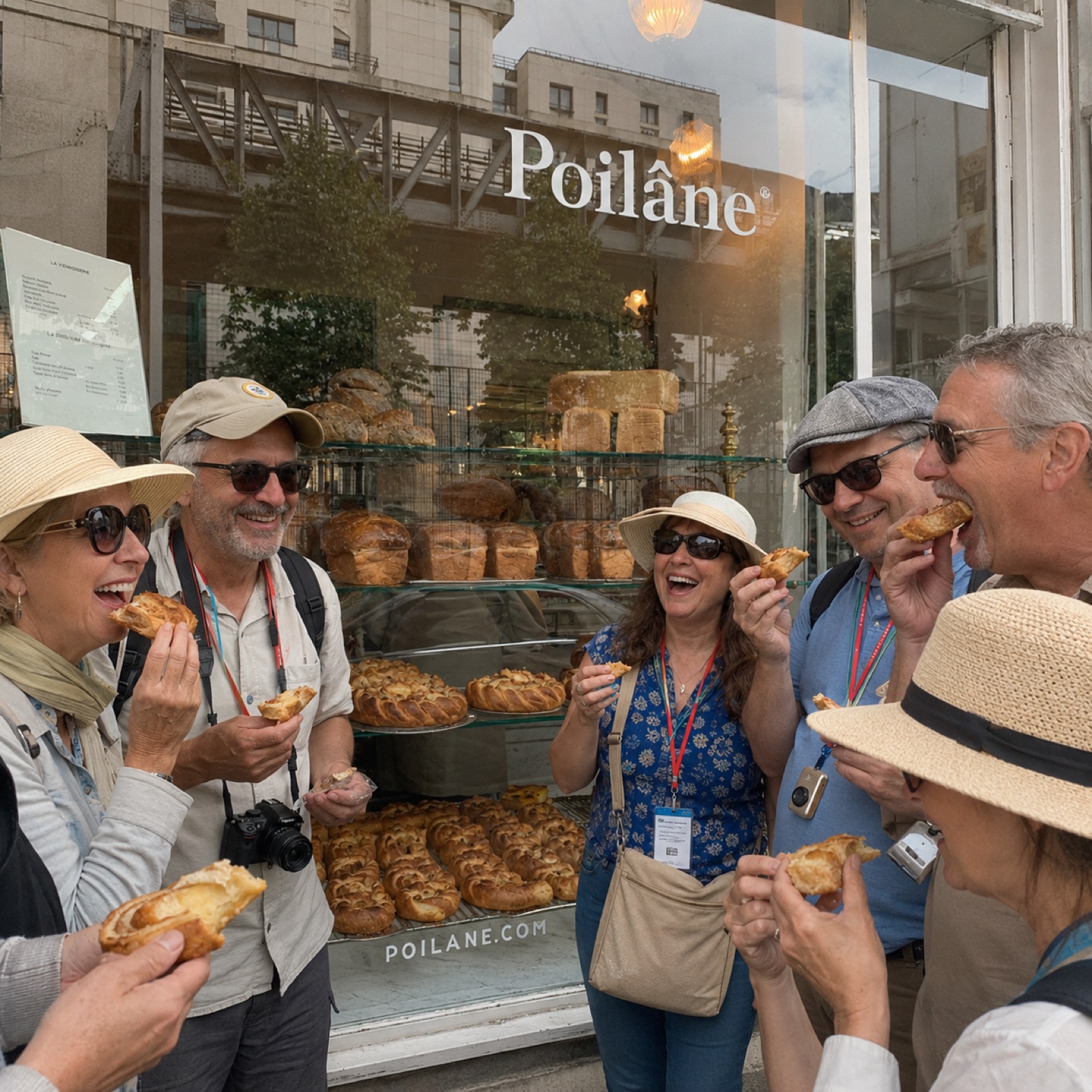
At Poilâne on Rue du Cherche-Midi, start with something that refuses the usual idea of French pâtisserie. The bakery is known for its round country loaves, made with sourdough and baked in wood-fired ovens, but its apple tart is the reason to pause. Thin apple slices are arranged in a tight spiral over a short, buttery base, then caramelised until the fruit is almost translucent at the edges.
Order a slice if you want a dessert with restraint rather than spectacle. It is lightly sweet, faintly tangy, and especially good with a café crème. If you are taking something back to your hotel, the small sablés are a more practical choice than a fragile tart. They travel beautifully and make an elegant companion to an evening glass of Champagne.
A short walk away on Rue de Sèvres, La Grande Épicerie is not a single pâtisserie but a very useful detour for the curious eater. Its counters offer a lesson in French appetite: biscuits, chocolates, fruit jellies, petits gâteaux and shelves of ingredients you may want to bring home.
This is the stop for a group with competing cravings. One person can choose a refined individual cake, another can find chocolate, and a third can be tempted by a tin of biscuits for later. It is also a sensible place to buy a gift when you do not want to gamble on a souvenir that feels generic. Look for products made in France, read the labels, and choose what you would genuinely enjoy opening once Paris is no longer outside your window.
The trade-off is atmosphere. This is a grand food hall rather than a hushed neighbourhood counter, so it can be busy. Go for range and discovery, then save the lingering for a quieter stop.
Continue towards Rue des Saints-Pères for Debauve & Gallais, a chocolate house with serious historical pedigree. Its founder, Sulpice Debauve, was a pharmacist who created chocolate coins to make medicine more palatable for Marie-Antoinette. Whether you arrive devoted to dark chocolate or merely curious, this is a lovely reminder that Parisian sweets have often sat at the meeting point of pleasure, health and social ritual.
Choose a small selection rather than an overfilled box. Their chocolate is best approached slowly, noticing texture and aroma as much as sweetness. Dark pieces will appeal to those who prefer roasted, bitter notes; pralines are softer and more generous. If you have spent the morning among the cafés and bookshops of the Left Bank, this is a fittingly cerebral sweet pause.
On Rue Bonaparte, Pierre Hermé offers a different kind of Parisian theatre: exacting, colourful, contemporary pastry. The macaron is often dismissed as a photogenic souvenir, but in skilled hands it becomes a study in contrast. A delicate shell gives way to ganache, cream or fruit filling, with flavours designed to unfold rather than simply announce themselves.
Choose three or four flavours and share them. Rose, pistachio, chocolate and seasonal fruit combinations offer a useful range, though the selection changes. Do not buy a dozen simply because the boxes are beautiful. Macarons are at their best fresh, and a carefully chosen tasting makes more sense if dinner is still ahead.
For travellers who prefer less sweetness, look for citrus or darker chocolate flavours. For those travelling with children or anyone devoted to classic French treats, this is likely to be the stop that earns the biggest smile. It is polished rather than rustic, and that is precisely the point.
Rue de Seine brings you to Gérard Mulot, where the window tends to make decisions difficult in the best possible way. This is where to choose an individual pâtisserie: perhaps a fruit tart, a mille-feuille, a chocolate creation, or a seasonal cake shaped by what is appearing at the market.
A fruit tart is particularly rewarding after richer stops. Its pastry should be crisp, the crème pâtissière cool and vanilla-scented, and the fruit bright enough to keep the whole thing lively. A mille-feuille, by contrast, is an exercise in glorious impracticality. The layers shatter at the first bite. Eat it at a table, not while trying to navigate cobblestones in your best shoes.
If your Paris plans include a market lunch, save Gérard Mulot for the afternoon. Pastry tastes more vivid when it is not following a heavy three-course meal.
Finish near Boulevard Saint-Germain at Café de Flore. You come here less for avant-garde pâtisserie than for the enduring pleasure of taking a seat in one of Paris’s most storied cafés. Order a coffee, a hot chocolate on a cooler day, and whichever dessert appeals from the menu. The real luxury is the pause: watching the footpath fill and empty, overhearing a little French, and letting the afternoon become unhurried.
It costs more than taking a pastry to go, and service can be brisk when the terrace is full. Still, for a first visit to Saint-Germain-des-Prés, the setting can be worth it. Treat the bill as payment for a place in the neighbourhood’s long conversation, not simply for a slice of cake.
The cleverest way to taste Saint-Germain is to vary texture and intensity. Begin with apple tart or brioche, move to chocolate, then choose either macarons or an individual pastry. If you want every stop, share. Two people can comfortably split most purchases, especially if you are also planning an aperitif or dinner.
Avoid the common mistake of treating every beautiful window as an instruction to eat immediately. Buy biscuits for later, chocolates for the flight home, and only the pastries you are ready to enjoy properly. Carry a small packet of tissues, as French pastry has little sympathy for white linen or a favourite vintage jacket.
Timing matters too. Mid-afternoon is ideal for a sit-down pause, while earlier in the day often offers the widest choice at bakery counters. Sundays can feel especially lively in Saint-Germain, but opening hours vary and some smaller shops may close on particular days. A little flexibility is part of the romance.
The loveliest dessert memory may not be the most elaborate one. It might be flaky pastry on your fingertips, a paper bag warmed by brioche, and five quiet minutes beside a Parisian window before you walk on.
Join our Custom Food & Wine Tour in Le Marais or Saint-Germain: bakery, cheese, wine, charcuterie and dessert over 2.5 hours, €120 per person.
See the Food & Wine Tour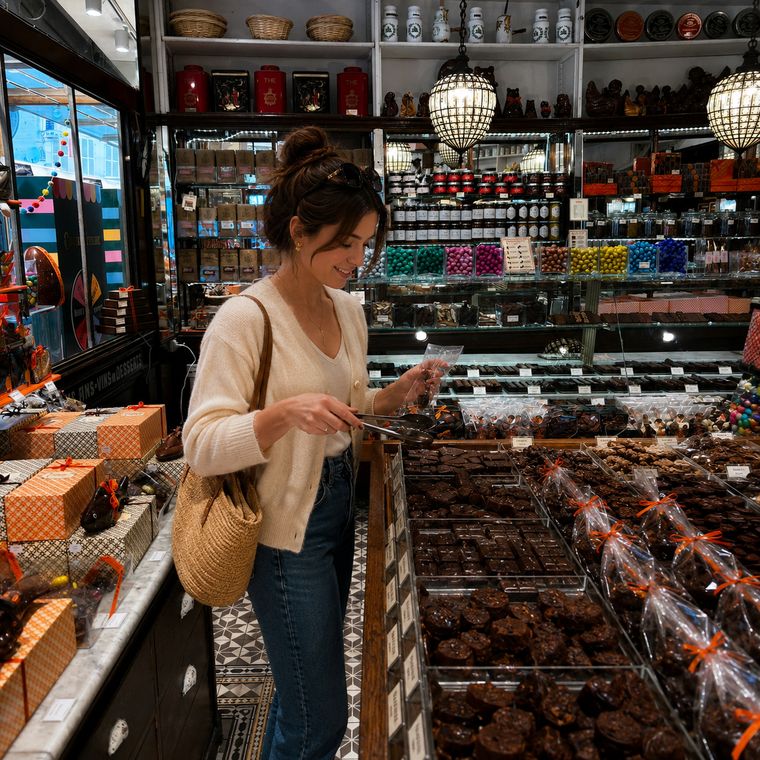
A French market etiquette guide for Paris, with graceful advice on greetings, produce, cheese and pacing your visit to Marché d’Aligre with calm assurance.
Plan a Champagne tasting in Paris with confidence: learn what to notice in the glass, which styles to try, and how to savour each pour with a local guide.