French Market Etiquette Guide for Paris Mornings
A French market etiquette guide for Paris, with graceful advice on greetings, produce, cheese and pacing your visit to Marché d’Aligre with calm assurance.
Rue de l’Odéon is only a short stretch of pavement, yet it contains enough literary electricity to power an afternoon. A Paris cultural walk here begins not with a monument but with a question: how did a few streets between the Luxembourg Gardens and the Seine become a meeting place for writers, publishers, philosophers and political exiles?
This is Saint-Germain-des-Prés at its most rewarding: not a postcard version of Paris, but a neighbourhood read at walking pace. Its history is best absorbed in layers - through a theatre façade, a bookshop window, a café table held for too long, and the quiet confidence of streets where people have come to argue about the world for centuries.
Start near Place de l’Odéon, facing the neoclassical theatre. The Comédie-Française has performed here since the late 18th century, but the square’s real pleasure lies in what radiates from it: a compact grid of streets made for lingering rather than marching.
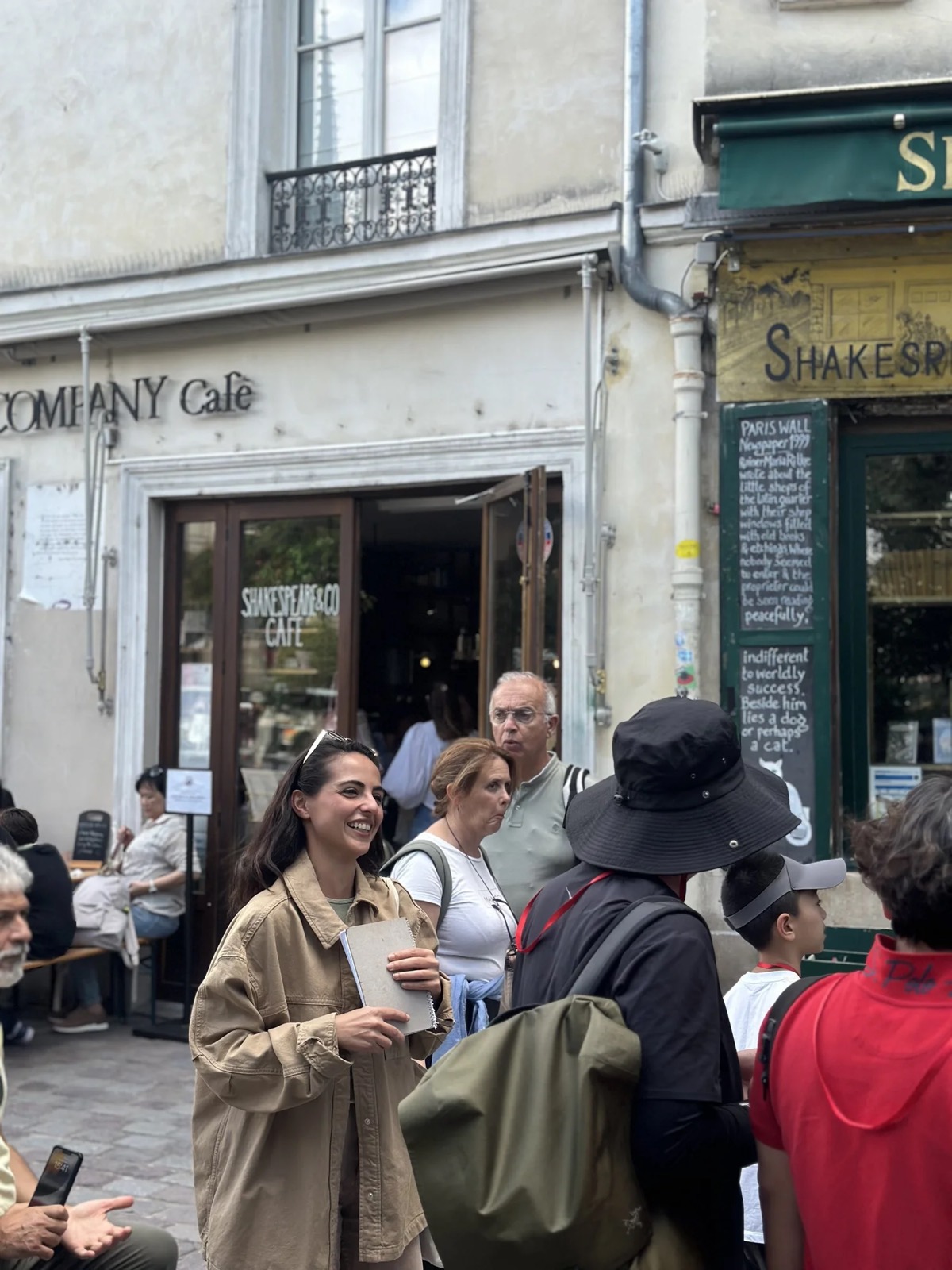
Rue de l’Odéon was once the address of Shakespeare and Company, the English-language bookshop opened by Sylvia Beach in 1919. It became a salon of sorts for the Lost Generation, welcoming Ernest Hemingway, Gertrude Stein, F. Scott Fitzgerald and, most consequentially, James Joyce. Beach published Ulysses in 1922 when English and American publishers considered the novel too risky to touch.
There is a useful correction to make here. The Shakespeare and Company bookshop visitors see today is on the Left Bank near Notre-Dame, not in its original Rue de l’Odéon premises. But standing on this street gives the story its proper scale. Joyce’s difficult, revolutionary novel was not born in some grand cultural institution. It moved through a small shop, a determined publisher, and a network of readers willing to pass a book from hand to hand.
The street still has that human proportion. Look up at the façades rather than rushing towards the next famous address. Parisian intellectual life has often depended on rooms above street level: modest apartments, editorial offices, private salons and rented bedrooms where someone was drafting an idea before it had a name.
From Odéon, walk towards Boulevard Saint-Germain and the cafés that became synonymous with post-war existentialism. Simone de Beauvoir and Jean-Paul Sartre are frequently reduced to two names on a café awning, which is a shame. Their relationship, their work and their public lives were far more complicated than the tourist shorthand suggests.
De Beauvoir was a novelist, memoirist, philosopher and one of the 20th century’s most influential feminist thinkers. Her 1949 book, The Second Sex, challenged the assumption that womanhood was a fixed biological destiny. Its argument was radical precisely because it began with ordinary social arrangements - education, work, marriage, desire, money and who gets to move freely through a city.
Café de Flore and Les Deux Magots remain handsome places to stop, especially if you accept the trade-off. You are paying partly for the setting, and the terraces can be busy. A coffee here is less about finding the most obscure address in Paris than claiming a front-row seat to a neighbourhood that has been watched, written about and argued over for generations.
Choose one café, not both. Settle in with a coffee or a glass of wine and notice how the ritual works: newspapers folded beside porcelain cups, waiters steering through narrow gaps, visitors craning towards the church of Saint-Germain-des-Prés. This is not a reenactment of Sartre and de Beauvoir’s Paris. It is a living social theatre, and your pause is part of it.
The church of Saint-Germain-des-Prés interrupts the café chatter with something much older. Its roots reach back to the sixth century, when a Benedictine abbey stood here beyond the medieval city. The present church is among Paris’s oldest, with a Romanesque bell tower that feels almost startlingly severe beside the polished shopfronts nearby.
Go inside if it is open. The dimness is restorative after the bright pavement, and it changes the rhythm of the walk. Paris is often presented in clean historical chapters - medieval, Enlightenment, Revolution, modernism - but this building resists that neatness. It has been rebuilt, damaged, restored and repurposed across centuries, while the district around it kept acquiring new voices.
Outside, the choice is yours. Those drawn to art might continue towards the galleries around Rue de Seine. Those more interested in ideas should take Rue Bonaparte towards the École des Beaux-Arts and the Institut de France. A good cultural walk does not treat every address as equally essential. It follows the thread that stays with you.
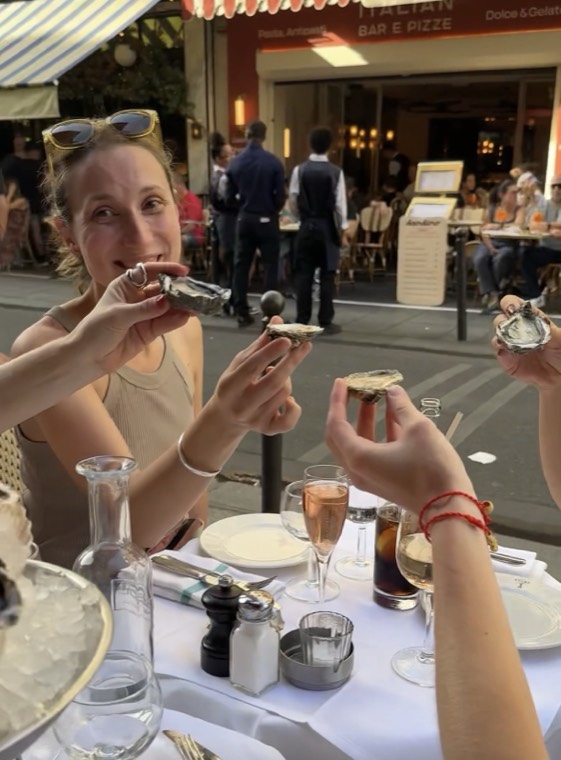
Saint-Germain rewards intellectual curiosity, but it should not be approached on an empty stomach. The neighbourhood has long been a place of conversation conducted over something small and well chosen: a tart, a wedge of cheese, a plate of oysters, a glass of Champagne before dinner.
For an afternoon pause, choose a pâtisserie counter that makes you stop. In a city full of celebrated names, personal taste matters more than collecting credentials. Perhaps it is a glossy chocolate tart, perhaps a madeleine still warm from the oven, perhaps a simple baguette with butter. Eat it slowly on a bench near the Luxembourg Gardens, where students, locals and visitors share the same green chairs beneath the chestnut trees.
The gardens offer a useful contrast to the tight intellectual geography of Odéon and Saint-Germain. They were created for royalty, redesigned for public life, and are now used with remarkable democracy. Children sail wooden boats on the pond. Friends meet after lectures. Someone is always reading alone. This is Parisian culture as practice rather than performance.
Allow two to two-and-a-half hours for this walk, longer if you plan to sit for lunch or browse properly. Comfortable shoes matter more than dressing for the photograph: the pavements can be uneven, and the best detours are rarely planned. Weekday mornings are quieter; late afternoon brings a warmer café atmosphere but also more people.
Resist the urge to turn the route into a test of recognition. You do not need to have read every novel associated with the neighbourhood to enjoy it. Read a page of de Beauvoir before you go, if you like. Carry Joyce in your bag, if that appeals. Or simply let the places prompt a question you can take home.
For travellers who would rather follow these stories with a local beside them, Rêverie Tours can shape a small-scale Paris walk around philosophy, history and the particular details that interest you. The difference is not just information. It is having someone point out why a street, a sentence or a café table still matters.
Before leaving Saint-Germain, choose one final unhurried act: buy a postcard, order a second coffee, or stand at the edge of the Luxembourg Gardens as the light changes on the gravel paths. Cities become personal when you leave room for a moment that was not prescribed.
Yes. It is compact, easily reached and unusually rich in literary, philosophical, artistic and religious history. It can be busy, particularly around the famous cafés, so morning or early evening usually makes for a more reflective experience.
Allow around two to two-and-a-half hours without a full meal. Add time if you want to visit galleries, browse bookshops, enter the church or settle into a café terrace.
No. Their proximity makes it tempting, but one well-chosen stop is more pleasurable than rushing through both. Pick the terrace or menu that appeals on the day and give yourself time to observe the neighbourhood.
Very much so. Saint-Germain is ideal for walking alone, reading in a café or taking a gentle detour through the Luxembourg Gardens. A guided experience can also be a lovely way to add conversation and context without joining a large group.
Not a checklist of names, but one idea that made the streets look different. It might be Sylvia Beach backing a book no one else would publish, or Simone de Beauvoir asking who gets to define a life. Let that thought accompany you to dinner - it is a finer souvenir than anything wrapped in tissue paper.
Join our Paris & the Philosophers Walk: two hours on the Left Bank with Beauvoir, Descartes, Rousseau and Voltaire, €65 per person.
See the Philosophers Walk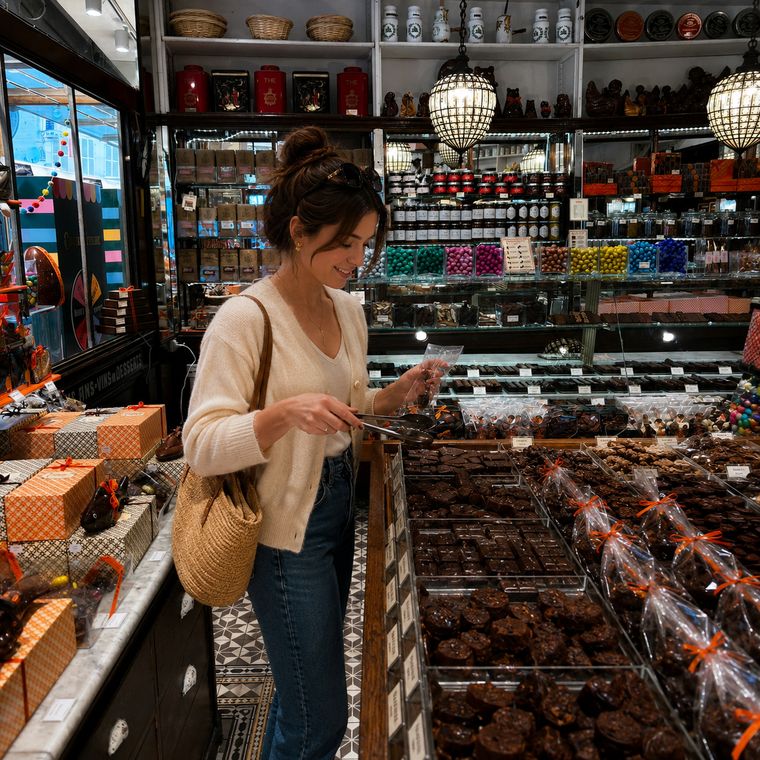
A French market etiquette guide for Paris, with graceful advice on greetings, produce, cheese and pacing your visit to Marché d’Aligre with calm assurance.
Plan a Champagne tasting in Paris with confidence: learn what to notice in the glass, which styles to try, and how to savour each pour with a local guide.