French Market Etiquette Guide for Paris Mornings
A French market etiquette guide for Paris, with graceful advice on greetings, produce, cheese and pacing your visit to Marché d’Aligre with calm assurance.
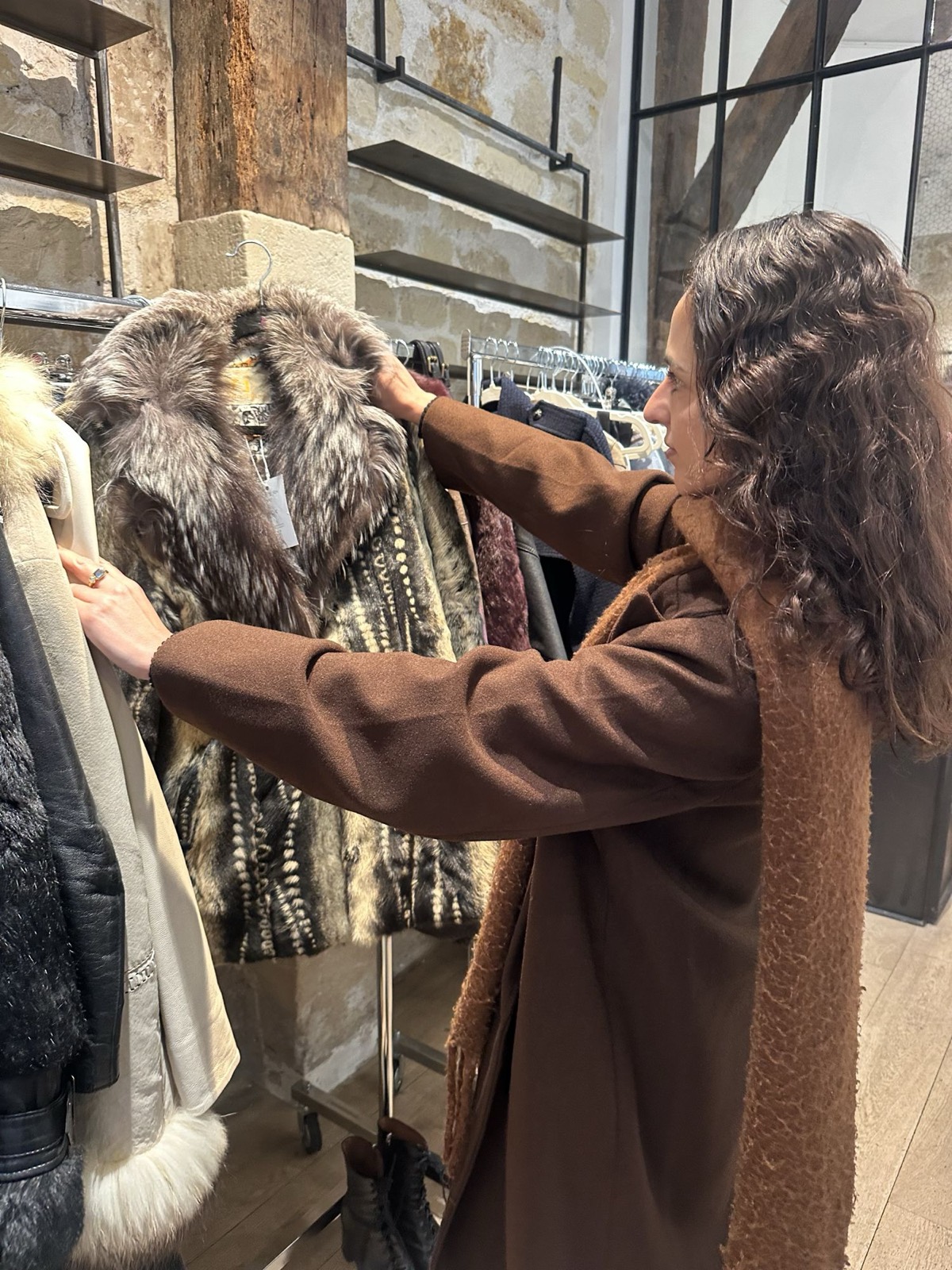
A silk scarf is rarely just a silk scarf in Paris. It might be a 1970s carré with a hand-rolled edge, a clue to the former owner’s taste, or the exact note of colour that turns a simple black coat into an outfit worth remembering. This Paris fashion tour example follows that idea: fashion as a personal language, read slowly through the rails, textures and streets of the Left Bank.
Rather than trying to cover every celebrated shop in an afternoon, the experience centres on a small area and a clear point of view. It is designed for travellers who would rather leave with one exceptional piece and the story behind it than a bag full of things chosen in a rush.
Begin near Sèvres-Babylone, where the city feels polished without becoming theatrical. The broad pavements around Rue du Bac and Rue de Grenelle make a graceful introduction, but the purpose is not to tick off addresses. Your guide begins by getting to know your eye: perhaps you collect 1980s tailoring, want an elegant dinner look, are searching for a special accessory, or simply feel curious about how Parisiennes build an outfit from old and new.
That conversation shapes the afternoon. A vintage-fashion tour works best when it is not treated like a scavenger hunt. Someone drawn to sharp Yves Saint Laurent-era shoulders needs a different route from a guest hoping for 1960s jewellery or a beautifully cut wool coat that will earn its place back home in Melbourne or Sydney.
The first stop might be a carefully chosen vintage boutique, where the pleasure lies in learning how to look. Your guide can point out the things that rarely announce themselves from the hanger: the weight of a good silk, the construction inside a jacket, the drape of a bias-cut skirt, the condition of leather at the corners of a handbag. A label matters, but it is not the whole story. Some of the most satisfying finds are anonymous pieces with extraordinary fabric, flattering proportions and another decade of life ahead of them.
From there, the walk moves at a human pace towards Saint-Germain-des-Prés. This is a neighbourhood of bookshops, cafés and beautiful façades, but it is also useful fashion territory because style here has always been connected to intellectual life. Think of Juliette Gréco in black, with a fringe and a cigarette at Café de Flore: not a costume to copy, but a reminder that personal style can be pared back and still full of character.
The best purchase is not necessarily the most expensive one. A local guide helps you assess whether a piece is right for your wardrobe, your suitcase and your actual life. That may mean encouraging you towards a vintage blazer you will wear weekly, or gently steering you away from a glamorous but fragile dress that needs more care than you want to give it.
There is practical knowledge, too. Vintage sizing can be mischievous, particularly in French pieces from the mid-century. Numbers vary, and alterations over the years are common. Trying on is essential. Your guide can help you consider fit through the shoulders, ease at the hip, sleeve length and how a garment moves when you sit down or raise an arm. A dress that looks perfect standing still is not always the dress you want for a long dinner in Le Marais.
Condition deserves equal attention. Light wear can be part of vintage’s charm; moth holes, persistent odour, brittle lining or cracked leather are a different proposition. Some flaws are easily repaired by a skilled tailor or leather specialist. Others change a bargain into an expensive project. The aim is not perfection, but an informed choice.
A private or intimate small-group tour of around two to two-and-a-half hours leaves room for instinct. You may spend twenty minutes in one shop and find nothing, then uncover the piece that makes the day in the next. That is not lost time. Fashion shopping in Paris is more pleasurable when there is space to compare, try on and change direction.
A well-paced route could include three kinds of stop. First, a tightly edited vintage boutique for clothing with real provenance and strong curation. Second, a specialist source for accessories, where a scarf, belt, brooch or handbag can add Parisian punctuation to clothes you already own. Third, a contemporary independent shop, chosen to show how current French style borrows from the past without being trapped by it.
The final stop need not be another shop. It could be a quiet café table, where purchases are considered over an espresso or a glass of wine and your guide suggests ways to wear them. A 1990s slip skirt may become more useful with a crisp shirt and boots than with the delicate top it was displayed beside. A vintage gold-tone brooch might sit beautifully on a linen jacket, a knit or even the strap of a simple evening bag.
That small pause is part of the point. Paris style has less to do with accumulating and more to do with editing.
For a guest who loves colour and prints, the tour may begin with scarves and silk blouses near Rue du Bac, then continue towards Saint-Germain for dresses and costume jewellery. The guide might look for pieces that echo the deep reds, tobacco browns and inky blues seen in the neighbourhood’s old book bindings and café interiors.
For someone who dresses more minimally, the focus could shift to line and texture: a camel coat, a well-cut cream blouse, a slate-grey jacket, a leather bag with good hardware. The pleasure here is in the subtle differences between something merely neutral and something beautifully made.
For a couple or friends with different tastes, the route can work just as well. One person may be looking for a statement piece while another prefers practical wardrobe foundations. The shared experience is the conversation: why a certain era favoured a silhouette, how French ready-to-wear changed after the 1960s, and why a garment made decades ago can still feel startlingly current.
Wear shoes you can walk in and a layer that is easy to remove in fitting rooms. Bring a small crossbody bag rather than anything cumbersome, and keep your shopping budget in mind before the first stop. Vintage prices in Paris range widely. A beautiful accessory may be an attainable souvenir, while a rare designer coat can be a considered investment.
It also helps to bring photographs of a few outfits you wear often. They give your guide a quick sense of your proportions, preferred colours and the gaps in your wardrobe. If you have a particular event ahead - an anniversary dinner, a wedding, a gallery opening - say so at the start.
Leave room for surprise. The perfect find may be a pair of 1980s clip-on earrings when you thought you wanted a handbag, or a men’s-inspired wool jacket that changes how you dress for work. A good fashion tour respects the brief, but it does not force the result.
Large Paris department stores can be useful, especially if you have a specific contemporary label in mind or limited time. Their strength is choice and convenience. A vintage-focused walk offers something else: a more intimate relationship with the city’s visual history, and a purchase with texture beyond a seasonal collection.
There are trade-offs. Vintage requires patience, sizing is unpredictable, and you cannot expect five identical versions of the same item. Yet that scarcity is often the appeal. What you bring home is unlikely to appear on someone else at a restaurant back in Australia.
Rêverie Tours approaches the experience as personalised fashion storytelling rather than a retail sprint. The guide’s role is to notice what delights you, offer cultural context without turning the afternoon into a lecture, and make the choices feel considered rather than overwhelming.
Yes. You do not need to know designers, eras or fabric terminology. The tour is especially helpful if you are curious about vintage but unsure how to judge quality, fit or value.
You may encounter designer pieces, but they cannot be guaranteed because vintage stock changes daily. The focus is on excellent style and condition, whether or not a garment carries a famous name.
Absolutely. Combining vintage with independent contemporary shops often gives the most useful picture of Parisian style, particularly if you want pieces that work together.
Keep the rest of the afternoon flexible if you can. A wonderful find may need a second try-on, and the nicest fashion memories are often made when there is no need to hurry. Let the piece you choose become part of the daydream, then wear it somewhere Paris asks you to linger.
Join our Vintage Shopping Tour: two personalised hours through handpicked Paris boutiques and designer archives, €65 per person.
See the Vintage Shopping Tour
A French market etiquette guide for Paris, with graceful advice on greetings, produce, cheese and pacing your visit to Marché d’Aligre with calm assurance.
Plan a Champagne tasting in Paris with confidence: learn what to notice in the glass, which styles to try, and how to savour each pour with a local guide.