French Market Etiquette Guide for Paris Mornings
A French market etiquette guide for Paris, with graceful advice on greetings, produce, cheese and pacing your visit to Marché d’Aligre with calm assurance.
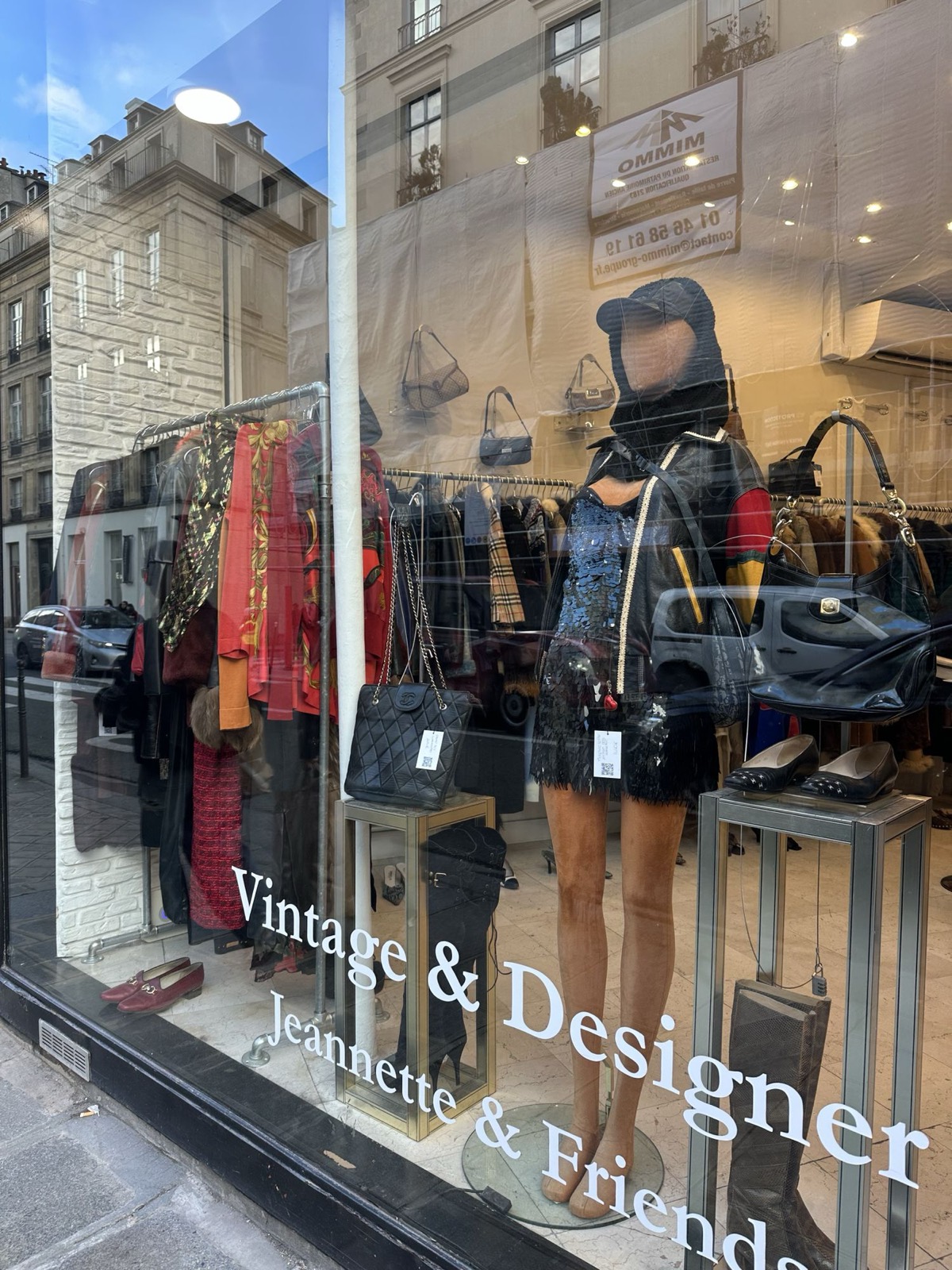
A silk scarf tied beneath the chin, a precise camel coat, a pair of softened leather loafers: the vintage fashion trends Paris is wearing now rarely announce themselves loudly. They surface in the small decisions that make an outfit feel considered rather than costumed. In a city where getting dressed is often a daily pleasure, vintage is less about recreating an era than borrowing its best idea.
For visitors with an eye for clothes, Paris offers a particular kind of shopping story. You may find a 1960s handbag that gives a simple black dress its point of view, or a beautifully cut 1980s blazer that makes sense with jeans and flat shoes. The pleasure lies in learning to recognise what belongs in your wardrobe, not merely what looks convincing on a rail.
Parisian style has always been shaped by contradiction: polish beside nonchalance, inherited pieces beside new ones, restraint interrupted by one exquisite detail. That is why certain decades continue to feel current here. They offer silhouettes with enough clarity to be recognisable, but enough flexibility to be worn now.
Mid-century Paris is often imagined in full skirts and pristine gloves. Those pieces exist, and a beautifully preserved cocktail dress can be a joy. Yet the more useful legacy is the era's attention to line. Think collarless wool jackets, neat shift dresses, compact top-handle bags and silk squares printed with horses, maps or abstract colour.
Look for a structured piece that can live with modern basics. A 1960s wool coat over a white T-shirt and straight-leg denim feels fresh; a matching skirt suit worn all together may feel more occasion-specific. Condition matters especially here. Check linings, underarms and closures, and hold pale silk up to the light to see thinning that shop lighting can hide.
The 1970s bring a softer Paris. Suede jackets, ribbed knits, bias-cut skirts and rich shades of tobacco, moss, claret and cream add depth without requiring a theatrical look. In Saint-Germain-des-Prés, these are the pieces that sit naturally alongside a good trench, worn boots and a market bouquet carried home for dinner.
A vintage leather jacket from this period is especially tempting, but take your time. Leather should feel supple rather than brittle, and a little patina is desirable only if the seams, collar and cuffs are sound. French sizing of the era can be surprisingly small, so ignore the label and judge the shoulder, armhole and movement through the back. Alterations can improve a hem or waist, but they cannot easily remake a narrow shoulder.
The vintage blazer is one of Paris's most dependable finds. The best examples from the 1980s have strong shoulders, a nipped or slightly boxy body, handsome buttons and fabric that still feels substantial: wool, tweed, linen or a wool-silk blend. Worn over a fine knit, an old concert tee or a slip dress, it lends shape without looking too formal.
This is also where discernment pays off. Not every oversized jacket is a treasure, and a famous label is not a guarantee of flattering cut or good construction. Try it on with the sleeves pushed up, then with your arms relaxed. Notice whether the shoulder line frames you or overwhelms you. The best piece gives you posture, not armour.
The current affection for 1990s minimalism makes Paris a rewarding place to search for slip dresses, long wool coats, sleek boots, small shoulder bags and clean tailoring. The appeal is obvious: these pieces combine easily with a contemporary wardrobe. But minimal clothing has nowhere to hide. Fabric, fit and finishing do all the work.
Seek out a bias-cut skirt with a clean fall, a simple black dress in substantial crepe, or a fine leather bag whose hardware has aged gracefully. Avoid buying a piece solely because it is branded or resembles a social-media reference. A dress that clings awkwardly, a bag with flaking edge paint or a coat with tired moth damage will not become more useful once it reaches your suitcase.
The difference between wearing vintage and looking as though you have arrived from a themed party is usually proportion. Parisians tend to let one older piece lead, then temper it with clothes that are unmistakably of the present. A 1970s suede jacket might meet wide-leg trousers and trainers. A 1960s scarf might be worn with a plain navy jumper. An 1980s gold earring might be the only flourish in an otherwise pared-back outfit.
This approach also makes shopping less pressured. You do not need to find an entire look in one afternoon. A pair of beautifully made loafers, a silk blouse or a belt with an unusual buckle may be the piece you wear most. The most memorable wardrobes are built through accumulation, with enough space for surprise.
Accessories deserve particular attention in Paris because they travel well and often reveal craft more clearly than a dress does. Scarves, gloves, costume jewellery, handbags and belts can carry the signature of a decade without demanding a perfect fit. For jewellery, inspect clasps, stones and plating. For bags, check corners, handles, zips and the interior for odour or deterioration. Vintage should feel lived-in, not neglected.
The Marais is an obvious starting point, but it is not a single shopping experience. Around Rue des Francs-Bourgeois and Rue Vieille-du-Temple, edited vintage boutiques tend to offer strong styling and a higher price point. This can be worthwhile if you value condition, curation and the chance to try several silhouettes in one place. Further pockets of the neighbourhood reward slower wandering, particularly if you are looking for denim, workwear, knitwear or playful accessories.
For a more mixed hunt, the Left Bank and the 9th arrondissement can offer a different rhythm: small resale shops, consignment rails and specialist dealers tucked between cafés, bookshops and everyday Paris life. Markets may bring lower prices and more serendipity, but they require patience and a sharper eye. The trade-off is simple: the more edited the shop, the less digging you do; the more informal the setting, the more carefully you need to assess quality.
Before you leave your hotel, take a few measurements from a jacket or dress you already love: shoulder width, pit-to-pit, waist and length. A tape measure saves disappointment, particularly when fitting rooms are unavailable. Wear a thin layer that makes trying on easy, and bring shoes close to the heel height you wear most. Most of all, leave room in your plans. Vintage shopping is not efficient in the conventional sense. A great find may appear after twenty minutes or after three hours.
If you prefer the hunt to be shaped around your own style, a personalised vintage-fashion shopping experience with Rêverie Tours can focus on the eras, labels, colours and price range that genuinely suit you. The aim is not to send you home with the most bags, but with a piece that keeps the afternoon in Paris close each time you wear it.
Ask yourself whether the garment has a role beyond the photograph. Can you picture it with three things already in your wardrobe? Does it fit comfortably enough to sit down for a long lunch, walk a few blocks and lift your arms? Does it feel like an extension of your taste rather than a souvenir of someone else's?
There are exceptions, of course. A spectacular beaded evening bag or an impractical 1950s hat can be worth buying simply because it delights you. Travel should allow for irrational beauty. But for clothing, favour natural fibres, excellent construction and a silhouette you will reach for repeatedly. Paris has a way of making every object look persuasive in the moment. Your future self will appreciate a little discipline.
It depends on the neighbourhood, condition, label and degree of curation. Specialist boutiques and consignment stores can be expensive, particularly for designer pieces, while markets and less polished shops may offer better value. Set a comfortable range before you begin, then judge each piece by quality and wearability rather than the label alone.
The 1960s, 1970s, 1980s and 1990s all offer highly wearable pieces. A tailored 1980s blazer, 1970s suede jacket or 1990s slip skirt generally integrates more easily than a complete period outfit. Choose the era that suits your proportions and the clothes you already own.
Check seams, lining, fastenings, underarms, hems and fabric for stains, thinning or moth holes. Test zips gently and inspect leather for cracks. Some signs of age are part of the charm, but structural damage or strong odours can be costly or impossible to remedy.
Simple adjustments such as shortening a hem or taking in a waist are often possible. Shoulder alterations, major resizing and work on delicate fabric are more complicated. Buy a jacket only if the shoulders sit well, and ask a trusted tailor before committing to a piece that needs significant changes.
A silk scarf, handbag, belt, jewellery or a well-cut blazer often makes an excellent choice. These pieces are relatively easy to pack and can transform clothes you already wear. A small, well-loved object can hold more of Paris than a suitcase full of compromises.
Choose the piece that makes you stand a little taller when you catch your reflection on the footpath. That is usually the one with a future in your wardrobe.
Join our Vintage Shopping Tour: two personalised hours through handpicked Paris boutiques and designer archives, €65 per person.
See the Vintage Shopping Tour
A French market etiquette guide for Paris, with graceful advice on greetings, produce, cheese and pacing your visit to Marché d’Aligre with calm assurance.
Plan a Champagne tasting in Paris with confidence: learn what to notice in the glass, which styles to try, and how to savour each pour with a local guide.