French Market Etiquette Guide for Paris Mornings
A French market etiquette guide for Paris, with graceful advice on greetings, produce, cheese and pacing your visit to Marché d’Aligre with calm assurance.
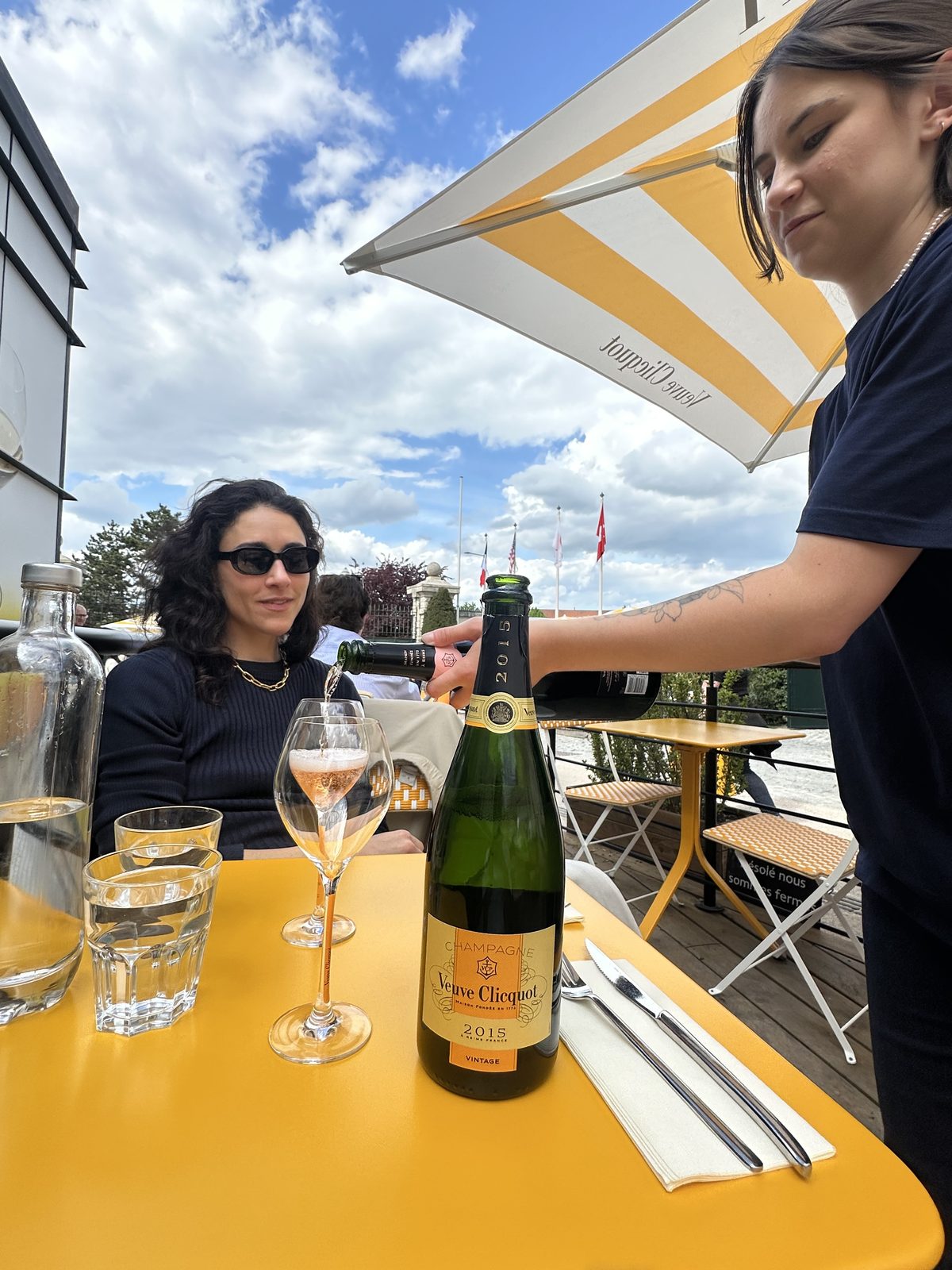
A bottle arrives in an ice bucket, the cork gives its soft report, and suddenly everyone at the table is looking a little more luminous. If “why Champagne expensive” is the question you typed before choosing a bottle, the short answer is that Champagne is not merely a style of sparkling wine. It is the outcome of a tightly bounded landscape, painstaking vineyard work and years of waiting underground.
That does not mean every costly bottle is automatically better, nor that a modestly priced Champagne cannot be delicious. But once you understand what happens between the chalky slopes north-east of Paris and that first bright sip, the price begins to feel less like a mystery and more like the cost of a very particular place.
Champagne can only be called Champagne when it comes from the Champagne region of France. This is protected by strict appellation rules, but the name is more than a legal label. The region’s cool climate, northerly position and ancient chalk soils create the sharp acidity that allows a wine to become sparkling, age beautifully and still feel alive after years in a cellar.
The area is not large in the way Australia’s broad wine regions can be. Its best-known subregions each bring a different character: the Montagne de Reims is admired for structured Pinot Noir, the Côte des Blancs for finely drawn Chardonnay, and the Vallée de la Marne for expressive Pinot Meunier. Within them, villages such as Aÿ, Ambonnay, Avize and Le Mesnil-sur-Oger carry their own reputations, built over generations.
Land here is exceptionally valuable. A producer buying grapes or tending a small family plot is working with one of France’s most expensive agricultural raw materials. Unlike a wine made from fruit brought in from a vast surrounding area, Champagne is limited by a defined geography, a finite number of vines and a climate that does not always make life easy.
Champagne’s weather can be a gamble. Spring frost, hail, rain at harvest and uneven ripening are real concerns, and yields are controlled from year to year. The wines need freshness rather than ripeness alone, so growers must make precise decisions about canopy management, picking dates and which parcels deserve to be kept separate.
Many grapes are harvested by hand. This is not simply a charming image of woven baskets between vine rows. Whole, undamaged bunches matter because the grapes are gently pressed soon after picking. Rough handling can add colour or bitter flavours, especially when working with red-skinned Pinot Noir and Pinot Meunier for a white wine.
Hand harvesting requires people, timing and coordination during a short, intensely busy period. It is one reason the production costs of Champagne are difficult to compare with those of a large-scale sparkling wine from a warmer region.
After the first still wines are made, the producer tastes and blends them. This is a creative and technical stage: a house may combine wines from different villages, grape varieties and vintages to achieve a recognisable character. Reserve wines from earlier years can add depth, which means some stock has already been held back rather than sold.
Then comes the traditional method. A measured mixture of yeast and sugar is added before the wine is bottled with a crown cap. A second fermentation occurs inside each bottle, trapping carbon dioxide and creating the bubbles. The yeast cells eventually die and settle as lees, beginning a long, quiet exchange with the wine.
By law, non-vintage Champagne must spend at least 15 months ageing before release, including 12 months on lees. Vintage Champagne requires at least three years, although many serious producers age their bottles far beyond the legal minimum. Five, seven or even ten years is not unusual for a prestige cuvée.
This ageing gives Champagne its notes of brioche, toasted hazelnut, cream and pastry, while preserving its line of citrus and mineral freshness. It also ties up capital. Bottles need storage, cellar space, handling and insurance while they are earning no money at all. When you pay for mature Champagne, you are paying for time as much as taste.
The sediment that creates those savoury, textured flavours cannot remain in the finished bottle. It must be moved gradually into the neck through riddling, traditionally done by hand on wooden racks and now often completed with carefully programmed machines. The neck is frozen, the plug of yeast is expelled, and a final topping-up mixture called dosage is added before the cork and wire cage are fitted.
None of this is a shortcut-friendly process. Even where machinery makes particular stages more efficient, Champagne still requires repeated handling and rigorous quality control. Bottles are heavy, fragile and stored for long periods. Packaging also tends to be more substantial than for everyday wine, from the dark glass needed to protect the wine to the foil, cork and cage designed to hold pressure safely.
The result is not just fizz. Fine bubbles, a persistent mousse and that distinctive combination of tension and richness are consequences of a bottle-fermented wine that has been allowed to rest.
A standard non-vintage bottle from a large house may be priced very differently from a grower Champagne or a prestige cuvée. The reasons can be meaningful, but they are not all in the glass.
Large houses often have the resources to source grapes from many villages, maintain deep reserves of older wines and create dependable blends year after year. You may also be paying for global distribution, handsome presentation and a famous name. That consistency can be reassuring when choosing a bottle for a celebration, particularly if you know the house style you enjoy.
A smaller grower-producer may make Champagne mainly from family-owned vineyards, sometimes from a single village or even a single plot. These bottles can feel more individual: one might be broad and red-fruited from Ambonnay, another lean and saline from Chardonnay vines in Avize. Their prices vary widely. A smaller label is not automatically cheaper, because limited production and meticulous farming can make each bottle scarce.
Vintage, vineyard designation and extended cellar ageing also raise the price. So does low dosage or a particular winemaking choice, though these terms alone are not guarantees of quality. The best value depends on what you want. For an aperitif with oysters, a vivid non-vintage brut can be exactly right. For a slow dinner where the bottle is part of the conversation, an older vintage or a distinctive grower Champagne offers more layers to notice.
Champagne’s reputation can bring a premium that has little to do with farming or cellar ageing. A celebrity association, limited-edition label, nightclub placement or extravagant gift box can lift the bill dramatically. These bottles may be fun, but they are not the clearest route to understanding the region.
It is also worth separating Champagne from excellent sparkling wine. Crémant, English sparkling wine, Franciacorta and Australian traditional-method wines can be beautifully made and offer terrific value. They may use similar techniques, but they come from different climates and soils, with different grape prices, rules and identities. Choosing them is not settling for less. It is choosing another expression of sparkling wine.
If you are ordering in Paris, ask whether a bar pours a grower Champagne by the glass, and whether the bottle is non-vintage or vintage. A thoughtful sommelier should be pleased to explain the producer, grapes and dosage rather than steering you only towards the most recognisable label. On a Rêverie Tours tasting, those small details are part of the pleasure: a wine becomes more memorable when you can connect its flavour to a village, a slope and the hands that made it.
Rather than asking only whether a Champagne is worth its price, ask what sort of occasion you are creating. A chilled bottle shared on a hotel balcony before dinner has its own kind of value. So does a carefully chosen blanc de blancs poured with oysters, where the wine’s lemony lift and chalky edge make the food taste even more itself.
Read the label, notice the producer and give the wine a moment in the glass. Champagne is expensive because it compresses land, weather, labour and patience into a bottle. The most satisfying one is not necessarily the rarest. It is the bottle whose character suits the table, the people around it and the memory you want to keep.
Join our Oyster, Wine & Champagne Tasting: two hours and three oyster bars in central Paris, €120 per person.
See the Oyster & Champagne Tasting
A French market etiquette guide for Paris, with graceful advice on greetings, produce, cheese and pacing your visit to Marché d’Aligre with calm assurance.
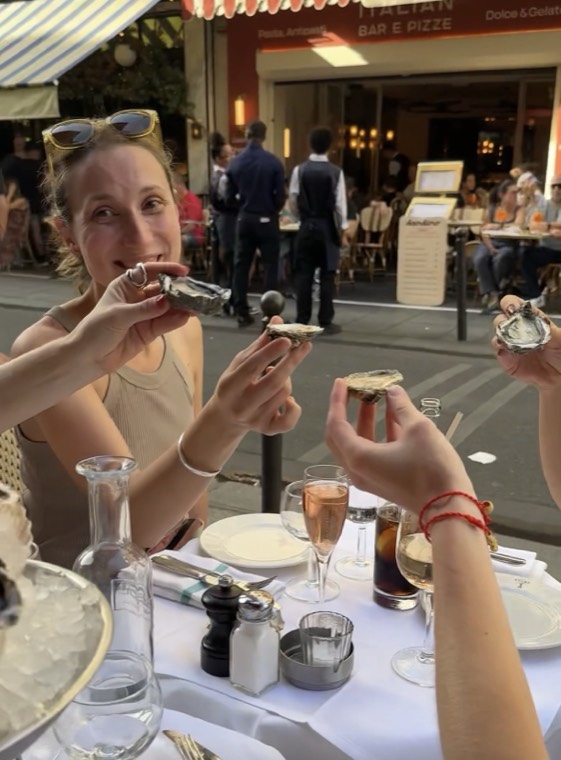
Plan a Champagne tasting in Paris with confidence: learn what to notice in the glass, which styles to try, and how to savour each pour with a local guide.